


adicionar à lista de desejos

Early Scholastic Christology 1050-1250 eBook
language: english
Publisher:
Oxford University Press, September of 2024 ‧
see product details
82,27€
10% OFF
ZGpjeU5FOTFVV3QwWkRKdWNFbHhjUzhyS3pCNlprWjFOWFIxYWpnNFRHSlhWRXMxY1RaSGNGWlZiMkZJZVRCSGRrRm5Ubk55YkdGdVZTOWlhMVYwY2xoRWVXSlFMMDVZZVVSUU5IRkpNRWdyTURSSVN6bERSVGcxWTJaS1NFeEhNV0YyUkhoVVVHczBSV1Z5Y1ZGTk16ZHpZMDlDY2taNVprUlRPRzQyVFVscE5tRjJWVTUzWTA5cU5XMXBNMU40V0hKcmVVazFZVXRHUTFWcmRqaEhZekZWVUdaTlNGVk1hbGxLYURaQmJrZGFNRFJPV1VSNU0wazNjbTh3THpad2IzTm1TV3hNZERKU1ZFNHhhRWcwVmpZNGEzZERLM0Y2ZWpKQ05VOVFWbXd3YXpKbFYwMVJORzR6WVZSQlMwTXlNbkoxT1dwQlMyNTBkMHhXZEdaTmNsa3hNbmN4TVUwdksweHFVRnB2UjB0UFZrSjBiamhHVFhGME5YYzJNV1JrUlZSb1lVOWlOV2d6V1Zvck5FNW1VaTg1WTIxMkwwZDZSMVpNY21kYVpubFZSR1V3Tm1VM2FIRXlUelExUlUxd1lYSlZabkJpYVhrNU5XcFBPRTE2YjBWNFlteHNNMVphVVZCYVEwWlVNMDFqWjA1c09VVnlZakF6Y2xsRVdERTNlRUUwTDFCcVlqWmpUbE5tWlRGd2NEazNiMFJvV1hrd01UVnlNakZZTlUxSGVtWXdhSFJRWkVkbVNtSjFhWHB6ZWtkS1pHbE1Oemt2VGxWSk9UTlJaVmxPZEhwNFJsUnZaMmhIVlVNM1RrOUVTVFZrWlZOMWVFeEJjWEYyT1c5MmFsTktWa2xXVjA1M2RITkxWa2htZFhWaGFGSmpXa050ZFVjek1XSm1lblZ4YldGS00yOVpVRzlvUW5CVVJ6UkJZVVI0TWtsYUwxaDNZeTlvV21RMk5HeENVamQ1TVdwUmREVlVOM0E1ZFhGcmRuWk9kMDQzV0hCM1oyczRTVkZXOkFoODQ4eXFIeUJvNFdiK2p0Q3NDV3c9PQ==
IMMEDIATE AVAILABILITY
Ebook for ADE
SYNOPSIS
This book traces developments in Christology--and specifically the metaphysics of the union of divine and human natures in one person--from 1050 (the age of Anselm of Canterbury) to 1250 (the age of Albert the Great). During the first part of the period, the key issue is the conflict between Augustine's homo assumptus (assumed man) Christology, defended by the Victorines, and that of Boethius's Chalcedonian Christology, defended by Gilbert of Poitiers (sometimes known as the 'subsistence' theory). By 1180, the latter of these was almost universally accepted. A third view, apparently accepted by Peter Lombard among others, according to which it is not true that Christ as man is something--the non-aliquid Christology--was condemned in 1177.The second part of the book traces the way in which theologians attempted to develop the presentation of Conciliar Christology by working out inchoate solutions to some of the metaphysical questions that the issue raises: what is the nature of the hypostatic union between the two natures, or the human nature and the divine person--is it something created, or something uncreated? And, given that the human nature is a particular substance, what prevents it from being a person? Theologians used insights from both of the rejected theories (the homo assumptus Christology and the non-aliquid Christology) in attempting to answer these issues.The early thirteenth century saw both the founding of the universities of Paris and Oxford, and the founding of the Franciscan and Dominican orders. The book explores the impact of these religious identities on the formation of Christological teaching.
DETAILS
| Property | Description |
|---|---|
| ISBN: | 9780198936039 |
| Publisher: | Oxford University Press |
| Release Date: | September of 2024 |
| Language: | English |
| Format: | eBook |
| File Format and Compatibility: | |
| Collection: | Changing Paradigms In Historical And Systematic Theology |
| Categories: |
eBooks in English
>
Faith & Religion
>
Science and History of Religions
|
| EAN: | 9780198936039 |
| Acessibilidade: | Ver características de acessibilidade indicadas pelo editor |
BOOKS FROM THE SAME COLLECTION
-
eBook10%Philosophical Justice And Reformation RighteousnessOxford University Press82,27€
91,41€ -
eBook10%Aquinas'S Summa Theologiae And Eucharistic Sacrifice In The Early Modern PeriodOxford University Press75,51€ 10% CARD
-
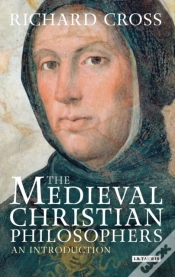
10%The Medieval Christian PhilosophersBLOOMSBURY PUBLISHING PLC189,26€ 10% CARDfree shipping
-
imagem não disponívelA Relational Based Approach To Working With Trauma. Attachment, And Dissociation10%A Relational Based Approach To Working With Trauma. Attachment, And DissociationTAYLOR & FRANCIS LTD33,79€ 10% CARDfree shipping