





adicionar à lista de desejos
SINOPSE
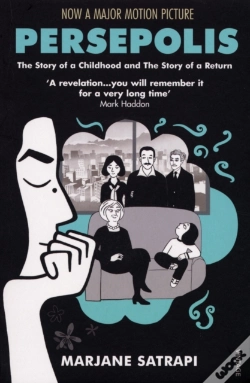
Now in one volume, both parts of Persepolis, Marjane Satrapi's brilliant memoir-in-comic-strips about growing up in Iran during and after the Islamic revolution.
Wise, often funny, sometimes heartbreaking, Persepolis: The Story of a Childhood tells the story of Marjane Satrapi's life in Tehran from the ages of six to fourteen, years that saw the overthrow of the Shah's regime, the triumph of the Islamic Revolution and the devastating effects of war with Iraq. The intelligent and outspoken child of radical Marxists, and the great-grandaughter of Iran's last emperor, Satrapi bears witness to a childhood uniquely entwined with the history of her country. Persepolis paints an unforgettable portrait of daily life in Iran and of the bewildering contradictions between home life and public life. Amidst the tragedy, Marjane's child's eye view adds immediacy and humour, and her story of a childhood at once outrageous and ordinary, beset by the unthinkable and yet buffered by an extraordinary and loving family, is immensely moving. It is also very beautiful; Satrapi's drawings have the power of the very best woodcuts.
Persepolis ends on a cliffhanger in 1984, just as fourteen-year-old Marjane is leaving behind her home in Tehran, escaping fundamentalism and the war with Iraq to begin a new life in the West. In Persepolis 2: The Story of a Return we follow our young, intrepid heroine through the next eight years of her life: an eye-opening and sometimes lonely four years of high school in Vienna, followed by a supremely educational and heartwrenching four years back home in Iran. Just as funny and heartbreaking as its predecessor - with perhaps an even greater sense of the ridiculous inspired by life in a fundamentalist state - Persepolis 2 is also as clear-eyed and searing in its condemnation of fundamentalism and its cost to the human spirit. In its depiction of the universal trials of adolescent life and growing into adulthood - here compounded by being an outsider both abroad and at home, and by living in a state where you have no right to show your hair, wear make-up, run in public, date, or question authority - it's raw, honest, and incredibly illuminating.
Wise, often funny, sometimes heartbreaking, Persepolis: The Story of a Childhood tells the story of Marjane Satrapi's life in Tehran from the ages of six to fourteen, years that saw the overthrow of the Shah's regime, the triumph of the Islamic Revolution and the devastating effects of war with Iraq. The intelligent and outspoken child of radical Marxists, and the great-grandaughter of Iran's last emperor, Satrapi bears witness to a childhood uniquely entwined with the history of her country. Persepolis paints an unforgettable portrait of daily life in Iran and of the bewildering contradictions between home life and public life. Amidst the tragedy, Marjane's child's eye view adds immediacy and humour, and her story of a childhood at once outrageous and ordinary, beset by the unthinkable and yet buffered by an extraordinary and loving family, is immensely moving. It is also very beautiful; Satrapi's drawings have the power of the very best woodcuts.
Persepolis ends on a cliffhanger in 1984, just as fourteen-year-old Marjane is leaving behind her home in Tehran, escaping fundamentalism and the war with Iraq to begin a new life in the West. In Persepolis 2: The Story of a Return we follow our young, intrepid heroine through the next eight years of her life: an eye-opening and sometimes lonely four years of high school in Vienna, followed by a supremely educational and heartwrenching four years back home in Iran. Just as funny and heartbreaking as its predecessor - with perhaps an even greater sense of the ridiculous inspired by life in a fundamentalist state - Persepolis 2 is also as clear-eyed and searing in its condemnation of fundamentalism and its cost to the human spirit. In its depiction of the universal trials of adolescent life and growing into adulthood - here compounded by being an outsider both abroad and at home, and by living in a state where you have no right to show your hair, wear make-up, run in public, date, or question authority - it's raw, honest, and incredibly illuminating.
DETALHES
| Propriedade | Descrição |
|---|---|
| ISBN: | 9780099523994 |
| Editor: | RANDOM HOUSE UK |
| Data de Lançamento: | março de 2008 |
| Idioma: | Inglês |
| Dimensões: | 126 x 182 x 25 mm |
| Encadernação: | Capa mole |
| Páginas: | 352 |
| Tipo de produto: | Livro |
| Classificação Temática: |
Livros em Inglês
>
Banda Desenhada
>
Novela Gráfica
|
| EAN: | 9780099523994 |
OPINIÃO DOS LEITORES
Um clássico
AR
Com uma cadência e riqueza pictórica um excelente livro que se tornou um clássico de graphic novel.
Genial e Cativante!
Cristina Ferreira dos Santos
Uma divertida e inteligente narrativa aos quadradinhos da passagem do Irão de sociedade secular ao Estado Islâmico. Marjane Satrapi faz-nos viajar a um mundo onde a liberdade tem um preço demasiado alto, onde se cresce depressa demais, mas onde a família é sem dúvida porto seguro. De esperar por mais.
SOBRE O AUTOR
Marjane Satrapi
Marjane Ebrahimi (Rasht, Irão, 22 de novembro de 1969 – Paris, 4 de junho de 2026). Aos catorze anos, os pais puseram-na a estudar na Áustria durante quatro anos, para a proteger da guerra Irão-Iraque. Regressou ao Irão para estudar Belas-Artes em Teerão. Aos vinte e quatro anos, decidiu mudar-se para França. Foi lá que escreveu Persepolis (L’Association), uma banda desenhada que relata a sua juventude marcada pela revolução e pela guerra no Irão, o seu desenraizamento pessoal e a sua chegada à Europa. A saga autobiográfica vendeu vários milhões de exemplares e foi traduzida em mais de cem línguas. O jornal The New York Times classificou o livro como o segundo melhor dos últimos trinta anos. Satrapi publicou ainda dois outros livros de banda desenhada passados no Irão: Broderies (L’Association) e Poulet aux prunes (L’Association, vencedor do prémio Melhor Álbum no Festival de Angoulême 2004).
Marjane afastou-se então da banda desenhada para se dedicar ao cinema e à pintura. Os seus dois primeiros filmes, correalizados com Winshluss, que participa nesta obra, são adaptações das suas obras: o desenho animado Persépolis, que ganhou dois Césares e foi nomeado para um Óscar, e o filme em live-action Poulet aux prunes. O seu primeiro filme não adaptado de uma das suas obras, The Voices, ganhou prémios no Festival L’Étrange e no Festival de Gérardmer. O projeto seguinte foi Radioactive, uma biografia sobre a radioatividade e Marie Curie.
Atrás da câmara, frente à tela ou nas bandas desenhadas, a artista Marjane Satrapi enaltece o pensamento independente e a luta quotidiana pela liberdade. Moveu céus para apoiar a revolta iraniana.
DO MESMO AUTOR
-
PersépolisBertrand Editora19,90€portes grátis
-
BordadosLevoir18,90€portes grátis
QUEM COMPROU TAMBÉM COMPROU
-
Palestine10%RANDOM HOUSE UK25,75€ 10% CARTÃOportes grátis
-
The Complete MAUS10%PENGUIN BOOKS LTD25,00€ 10% CARTÃOportes grátis