


adicionar à lista de desejos
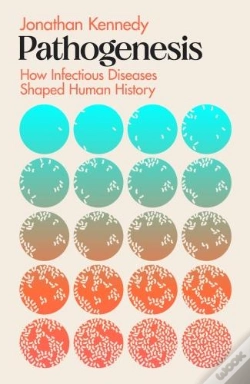
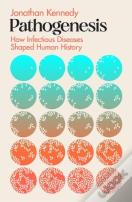
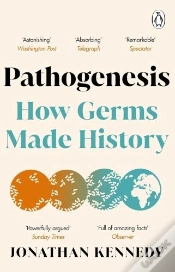
Pathogenesis
How Germs Made History
idioma: inglês
Editor:
Transworld, abril de 2023 ‧
ver detalhes do produto
SINOPSE
Humans did not make history - we played host.
According to the accepted narrative of progress, a few great humans have bent the arc of history. But in this revelatory book, Dr Jonathan Kennedy argues that germs have done more to shape humanity at every stage, from the first success of Homo sapiens over the equally intelligent Neanderthals to the fall of Rome and the rise of Islam.
How did an Indonesian volcano help cause the Black Death, setting Europe on the road to capitalism?
How could 168 men extract the largest ransom in history from an opposing army of eighty thousand?
And why did the Industrial Revolution lead to the birth of the modern welfare state?
The latest science reveals that infectious diseases are not just something that happens to us, but a fundamental part of who we are. Indeed, the only reason humans don't lay eggs is that a virus long ago inserted itself into our DNA, and there are as many bacteria in your body as there are human cells. We have been thinking about the survival of the fittest all wrong: evolution is not simply about human strength and intelligence, but about how we live and thrive in a world dominated by microbes.
According to the accepted narrative of progress, a few great humans have bent the arc of history. But in this revelatory book, Dr Jonathan Kennedy argues that germs have done more to shape humanity at every stage, from the first success of Homo sapiens over the equally intelligent Neanderthals to the fall of Rome and the rise of Islam.
How did an Indonesian volcano help cause the Black Death, setting Europe on the road to capitalism?
How could 168 men extract the largest ransom in history from an opposing army of eighty thousand?
And why did the Industrial Revolution lead to the birth of the modern welfare state?
The latest science reveals that infectious diseases are not just something that happens to us, but a fundamental part of who we are. Indeed, the only reason humans don't lay eggs is that a virus long ago inserted itself into our DNA, and there are as many bacteria in your body as there are human cells. We have been thinking about the survival of the fittest all wrong: evolution is not simply about human strength and intelligence, but about how we live and thrive in a world dominated by microbes.
DETALHES
| Propriedade | Descrição |
|---|---|
| ISBN: | 9781911709060 |
| Editor: | Transworld |
| Data de Lançamento: | abril de 2023 |
| Idioma: | Inglês |
| Dimensões: | 153 x 236 x 28 mm |
| Encadernação: | Capa mole |
| Tipo de produto: | Livro |
| Classificação Temática: |
Livros em Inglês
>
Ciências Exatas e Naturais
>
Biologia
|
| EAN: | 9781911709060 |
-
10%PatogenesisEdiciones Salamandra22,01€
24,46€portes grátis -
10%PathogenesisTRANSWORLD PUBLISHERS LTD13,37€
14,86€
QUEM COMPROU TAMBÉM COMPROU
-
10%When Brains DreamWW NORTON & CO18,92€ 10% CARTÃOportes grátis
-
10%First StepsHarperCollins Publishers14,86€ 10% CARTÃO