


adicionar à lista de desejos
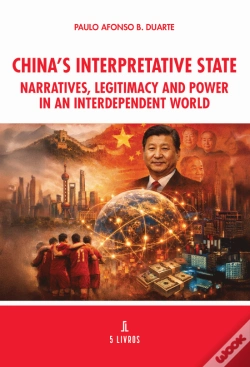
China's Interpretative State
Narratives, legitimacy and power in an interdependent world
idioma: inglês
Editor:
5livros, abril de 2026 ‧
ver detalhes do produto
22,50€
10% DESCONTO
IMEDIATO
TW1oNmRUaE5kbmgwU0ZKalREZHJaR1pRVFhCSWJEUlRMMDAxTlU5NlJuUkJNazB4ZFdONFUzVnVRM0pVUkVzcmNGQkxNbEkxYUZCVlpXeERUalY2TDBWMmEwMHhVSEpQZGxGRWNqTkVVbXRhZFdkNVIwOVJZakpGY0M5NVdsbHRXbk01Tm5CMUsxbGpVVTFaWVZOd1pWcGhWM05PVGxsVVoxRjBZaXRFVGxGclFsWlJRMnhOT1hadmQwTmxUalZRVDA5NVdURlphWFZwVEdOU09YQTFSRWhoVEhGUFZGbzVTblpDYkRGdmJtUktUR28xVFdzclEwWXdibEpUTUZJeFdsSnVXR3BCV21kTlZFYzFVM0JFUjBObVNYYzRVVmc0TWpsWFdHc3ZjVk5WZFRsdWRVaHdTMnhQVkM5TUsxWjVNRmRTYTFaRVVXSk5SM1ptTUdSVFVFbHJOVWRwTkd4M1MzWklkWEZhWlZrclZtZENlRXhUVWpCMVJVdERZbk5JWVhwWGVXMHdjMUprUWl0UU56Rm5TMlp5UVhWV1prOVlVVEJvY0VsVldUQnpNSFZ6TURWRFVUVTFTbXBuZVRjd1Z6RkJSWEJ4YkVaRmQydHdSMUZKZFcxU2IzVm5MemR6V2toaU0zUmtaRWRYTWxWWmVuUXdSbkZVYUhsSWR6RjVZVlpYWWxsck0yNDNaRWRYWWpGQ0wwbHRWWFpLU0VoSVFqSkNVVXN6SzBaUlUzQmhhRzR4UlZaaVVtUjBRM2g2T0ZJNU4ydzVPRzlQYTBsblMyMW5aRFJZWVdjdlZUWkVNaTl3V2t0dWNIbFlTbVU1Wmt4SWF6ZGpVMk4wZW1sbllVSmFNVnByWjJablUzWnRURmxpUmtVMk4xSjBVRlpwUmtsb1RtOVFVemx0ZUhOaVRXZEZUVUpLWTJzNWNHVkJRM1JITjFaMlIyczRXRmhYVkhaNFUzcG5LMk4wV0VOcWQzbzRialY0ZVUxU1dsbFFVMFZyZGt4RlVtMVZhVWd6ZG5GWE1IWnpaazVxVFd4VFYxUmtNM0JRZFRsM1FUMDk6QUE5STEyNk1ScjF3K1Y1L0pJbmtUdz09
EM STOCK
-
portes grátis
SINOPSE
China’s rise is usually measured through economic growth, technological innovation, or military strength. Yet these indicators alone cannot explain how the country governs itself or how it positions its power in an increasingly interconnected world.
In China’s Interpretive State, Paulo Duarte offers a compelling new perspective: modern Chinese governance operates not only through institutions and policies, but also through the strategic construction of narratives that define reality, shape public expectations, and guide political action.
Drawing on political theory, discourse analysis, and international relations, the book examines how narratives function as instruments of authority across four key arenas: leadership legitimacy, social cohesion, foreign policy, and financial security. From Mao Zedong’s revolutionary discourse to Deng Xiaoping’s developmental pragmatism and Xi Jinping’s vision of national rejuvenation, Duarte reveals how China’s leaders have used interpretation itself as a tool of governance.
Insightful and timely, this book provides a deeper understanding of how China manages complexity, legitimacy, and power within today’s global order.
In China’s Interpretive State, Paulo Duarte offers a compelling new perspective: modern Chinese governance operates not only through institutions and policies, but also through the strategic construction of narratives that define reality, shape public expectations, and guide political action.
Drawing on political theory, discourse analysis, and international relations, the book examines how narratives function as instruments of authority across four key arenas: leadership legitimacy, social cohesion, foreign policy, and financial security. From Mao Zedong’s revolutionary discourse to Deng Xiaoping’s developmental pragmatism and Xi Jinping’s vision of national rejuvenation, Duarte reveals how China’s leaders have used interpretation itself as a tool of governance.
Insightful and timely, this book provides a deeper understanding of how China manages complexity, legitimacy, and power within today’s global order.
DETALHES
| Propriedade | Descrição |
|---|---|
| ISBN: | 9789895863105 |
| Editor: | 5livros |
| Data de Lançamento: | abril de 2026 |
| Idioma: | Inglês |
| Dimensões: | 162 x 236 x 10 mm |
| Encadernação: | Capa mole |
| Páginas: | 156 |
| Tipo de produto: | Livro |
| Classificação Temática: |
Livros em Inglês
>
Política
>
Política Internacional
|
| EAN: | 9789895863105 |
SOBRE O AUTOR
Paulo Duarte
Paulo Afonso Brardo Duarte é Professor Auxiliar na Universidade Lusófona (Porto) e Professor Auxiliar Convidado na Universidade do Minho (Braga), Portugal. É doutorado em Ciência Política pela Universidade Católica de Lovaina (Bélgica) e possui um pós-doutoramento em Relações China-UE (Universidade do Minho).
(ver mais)DO MESMO AUTOR
-
A China nas Relações Internacionais10%5livros22,50€
25,00€portes grátis -
A China, A União Europeia e o Atlântico10%5livros22,50€
25,00€portes grátis