



adicionar à lista de desejos
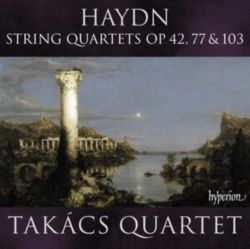
Haydn: String Quartets, Op. 42, 77 & 103 - CD Music
label:
HYPERION, September of 2022 ‧
see product details
27,04€
10% OFF
CARD
TVM5a1JWQndTVXgwV0U1MEsyZDNjVVExYW1keGJXNXNNWGw1V0dJeVF5OVZjVXRoVXpCNFdpdHdiVzVKUjNRelprOXRNMUFyTlZKb1F6RklLeTlLTW5SVWR6Y3ZhREE0Um1sWU5UUnJhRFp3WlZnd2NVVndNbVYzVFZKVWRGSTRNVFF6WVc5dFFYSnVZWEJQUnpsTGNIUk1TVlUzUVRObU9FeG5VMVZETWk5UloybDJjM1ZrTVZoalYyRTJVazlSVjJkd1lrWlNkMjEzZDJFMEwzZHRNSFJZWjI5WE1GRkpSbEJ6TW5Wc1pXbGhZMVJ5WTIxdWRsWnRNVEpXZVVWcWRUSTVkbVZMYjI1T2RrNXJUVWg0YmpkVVQxUkRjeXR4TlVaVFZHdENkbHBNUkRGMmJIUkdibGc1TW1wQ1dDOUpTVkZuV2s5cU1pOTFURXRQWW1GeFdpOXBWbWRXTkdwelNuRklSM1kyZFRreFdXdHRTR1ZrWmtKeFpFZFhOR1l6Y2xKV1ZuUXZkMlpVTjFnd2JsWnNSakpvWlVvemJtdDRZMnR5Y0VGbmMydHNVMlJsUkRKd1RHRkpXRlpqUmtGcmQxQlljak5wZEVSTWIwRXhhRFZCYURSellXeDZVbGhCYVZwNmVHd3hjMnBJSzJGRFdHRmlVamN3YlhwMFZsZFVkMnBFVTJwMFppdGlXbWhrTkVWUU9ITkZkSFpTVlVWb1VIRnJWM04zYzB4bGVFWklLekJQZG1KMVJUZENNVFIwWVhWdWJsTnRaMU51WVZOcGF6UmxlSGR1UVhobVVtRkdiMHd5TDBvck9GRldXVkJqY0RsVk1URmFhRkZtWjFwU2MxcHdTMlJ5V25weldXWm5jR2dyVldVeWQzaDJPR1pIUWl0SGRGVmlVMjVrZW5sQmFtUlVaemx1VFZSMmJITmpUbEpWUjNwNkwzZHhhWFZWVkhwc2NYZG1WMXBaTDBGTFlYZEdRbEl4T0V0RllYZzJaV2RCTlhvM1VGcG1hRzVYVEUxU05YaEhXalV3TkdvclVIa3JjakJyYVVoS1VXRlVlVWhEY0haNFRDOTRlRVpqYTB4VmFFODFRME4wUzFCb1UyaDNXRWROZG1wdVNuZ3hjeTl4T1c1bmNVOU1XRkpQUm1jeWNtRkxXV3BTV0RJNFJHUkJRMGM1V21sTlMwRktjM0lyY0U1SFkxVjVlWGhOYTJwclltdDVSR1pMY0RkWlNpOTNTMmwwUkVsYWVWWktiRmd3UkZWRlpFaGFWamw2V0dkWlF6VnJhMUl2VVM5cVYzZFNVM28wU1dsdVV6azNZMXBUYVhZMlFYSTVVemh1YzJSblJFaGFjMUpZYkhKQjpRdXVSeS8wSXpCQjVscVFLN3NZa253PT0=
free shipping
ARTICLE DESCRIPTION
ALIGNMENT
Disco 1
01 - I. Andante Ed Innocentemente
02 - II. Menuetto. Allegro - Trio
03 - III. Adagio E Cantabile
04 - IV. Finale. Presto
05 - I. Allegro Moderato
06 - II. Adagio
07 - III. Menuetto. Presto - Trio
08 - IV. Finale. Presto
09 - I. Allegro Moderato
10 - II. Menuetto. Presto Ma Non Troppo - Trio
11 - III. Andante
12 - IV. Finale. Vivace Assai
13 - I. Andante Grazioso
14 - II. Menuetto (Ma Non Troppo Presto) - Trio
DETAILS
| Property | Description |
|---|---|
| label: | HYPERION |
| Release Date: | September of 2022 |
| Dimensions: | 125 x 140 x 8 mm |
| Format: | Music |
| Categories: |
Classic
>
Camera Music
|
| EAN: | 0034571283647 |
| Duration (m): | 72.39 |
| Number of disks: | 1 |
| Format: | CD / Album |
ABOUT THE ARTIST
Joseph Haydn
Joseph Haydn was one of the most important and influential composers of the classical period, born on March 31, 1732 in Rohrau, Austria, and died on May 31, 1809 in Vienna. Known as the "father of the symphony" and the "father of the string quartet," Haydn played a central role in shaping instrumental music as we know it today.
Haydn grew up in a humble family, and his musical talent was identified at a very young age. At the age of eight, he was sent to Vienna, where he became a chorister at St. Stephen's Cathedral. After his voice changed, he was forced to leave the choir and began working as a freelance musician, during which he honed his skills as a songwriter and musician.
The great turning point in Haydn's career came in 1761, when he was hired by the Esterházy family, one of the richest and most powerful in Hungary. As Kapellmeister (music director) in the service of the Esterházy family for almost 30 years, Haydn had the opportunity to compose and experiment freely, which resulted in a vast production of chamber music, symphonies, operas and sacred music. During this period, Haydn composed more than 100 symphonies, of which the most famous include Symphony No. 94 (Surprise), Symphony No. 100 (Military), and Symphony No. 104 (London).
Haydn is also known for his choral and sacred music, with notable works such as the oratorios The Creation (1798) and The Seasons (1801), which reflect the influence of Handel, whose work Haydn deeply admired.
Joseph Haydn's legacy is vast and enduring. Not only did he directly influence his contemporaries, such as Mozart and Beethoven, but he also established many of the forms and structures that would become standard in Western classical music. Haydn is remembered as a master of form and a tireless innovator, whose music continues to be admired and studied around the world.
BY THE SAME ARTIST
-
Joseph Haydn - Symphonies No 94 'Surprise', No 101 'The Clock', No 104 'Bagpipe' - CD10%Classical Gallery3,90€ 10% CARD
-
String Quartets Op. 1, Nos. 5 & 6 • Op. 2, Nos. 1 & 2 - CDNAXOS30,84€