

adicionar à lista de desejos
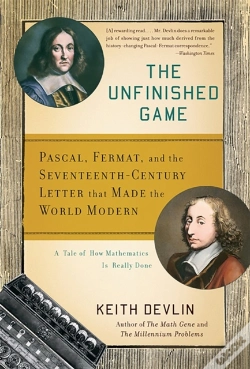
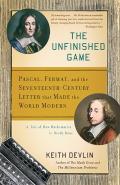
The Unfinished Game
Pascal, Fermat, And The Seventeenth-Century Letter That Made The World Modern
language: english
Publisher:
BASIC BOOKS, March of 2010 ‧
see product details
22,97€
10% OFF
CARD
UXpsT1dqaDZNRWRoWnpoMFIweHRNVEY0Y1hCTVVUSkxPRmhxY0hScVFUUTNNM2N4VURKa05UTnBVRUY0VkhOcE0zQjVja3hvTlcxaVVXeE9lR3RJVkdGeFV5c3dSR0ZEV2tOeFUwRndXVTk2UTFKaFpISXZhVVJIWlhCUmFVUTRhbTkxVUdGd2NVbDNTbGR5YUZGSFNERkhkMGxoS3k5V1UzUldTR3RNY1hOTFlWRmFWVTh2TjI1VGNHUlJVbUVyTkVoUmFqaDNWWFptVm5JM2RWTnBRM014SzJNMWF5dGlOVmw2U1hoNmJIUjNhSGR0Tmsxc2NIZERlblJLVlU5V2NVMW9VM1psUWpKMWEyUkZPVlpuTkZwSU9GRk5aR0ZtTDBwMEwySlJSME00YTFVNFJWTm5UWFIwYTNnNVVGVnFUa2xSV0ZwQmNHMTJlVE5XVFZwTk5HaFVXVFpDYW5WU2RVYzRVVWd2Y0dFMFpFUnhWamgzVldkRWVXbFNUMFZzYkhWM2FGbGhWVkpNVEN0dWRDOVVSblpQYUhWSE5XRlVORlE1U2pkM1QwVk9OVGRyYzJSaGQxRmFUVlZvUzNFemFtOHZhRkJPU1U5TWNUWjBlVGxvTURJNWFVSjBjbEYzVXk5c1VtaEtiR05CVFd4UWJXYzVNVFpNYkdreU4wcEZja2xHY2paMU5uSlJjMGhCWm5JM1UybFhWR2haVVhaa1JFcDVlRm94WVZsWFltNTNZVEJqUTNoa1F6SmtjR2x5VVRWM1NVOVNSV2d5UmpKaVIyVk1SRlpWYm10U2RtbEJObVJZTVVFd1JWWldjVEZuZGpkT1NFdzVVRk5vWkhoeWR6bE9TVXBGTlRGVlFqTlJMemxDYm13eVJESTRUbXh2TDJSMmVIQlBOMEZDUzJ0c1NtZFRTelZHSzBsdlQweHZORGQ1ZGl0a1ZqZE9lV2hKVGxBd1UwVklkRlJ5YzNCM1RYTnJPRTUzYzNOcFVucGlTRFJSV0doMU1VMDVNalZQTjJSSWFtZFhhR05KV201UFIxUnRaVGRXVVVKcmJWbFBTMVZtTmtOYU9HTlJLMFZEWjI5eWJHVnJhRkI2VUVkQkwzWlpTMHhTWTJ4RlNqRm5LMWxsWmsxdWQxTnpiMGRCTkRWd2NuVm9Sa3RIZDJrNFVUTmlja05zWXpOa00yUnhSR1F4UTBoblNIbE5jSE5JVVVWa1RTdEVVSGxrVURSQ09XbDNZbGxETWtGdFpXWnBTbEZwY21oYU1ERkZXVVpGVjBkUmFGTlBVbEpPTTFCbGFuazNRMEp4UTBWdlEwWk9XRzFtZFhSR1FrZEdSMjFpTkhORk9FVklOMWcxTUdKSU9VZFZPU3M0TlZFNFJURTJTamxLVFdWSWRuaE5RVDA5OjNhK0tXa3Jqblc1RFBCMGNSSnRuQnc9PQ==
free shipping
Sell your book
SYNOPSIS
In the early seventeenth century, the outcome of something as simple as a dice roll was consigned to the realm of unknowable chance. Mathematicians largely agreed that it was impossible to predict the probability of an occurrence. Then, in 1654, Blaise Pascal wrote to Pierre de Fermat explaining that he had discovered how to calculate risk. The two collaborated to develop what is now known as probability theory,a concept that allows us to think rationally about decisions and events. In The Unfinished Game , Keith Devlin masterfully chronicles Pascal and Fermat's mathematical breakthrough, connecting a centuries-old discovery with its remarkable impact on the modern world.
DETAILS
| Property | Description |
|---|---|
| ISBN: | 9780465018963 |
| Publisher: | BASIC BOOKS |
| Release Date: | March of 2010 |
| Language: | English |
| Dimensions: | 140 x 215 x 11 mm |
| Cover: | Softcover |
| Pages: | 208 |
| Format: | Book |
| Categories: |
Books in English
>
Science
>
Mathematics
Books in English > Others |
| EAN: | 9780465018963 |
ABOUT THE AUTHOR
BY THE AUTHOR
-
10%Os Problemas do MilénioGradiva21,20€ 10% CARDfree shipping
-
10%A Mathematician'S Angle On School MathAmerican Mathematical Society41,36€
45,96€free shipping
PEOPLE WHO BOUGHT ALSO BOUGHT
-
10%The Book On Games Of Chance: The 16th Century Treatise On ProbabilityDOVER PUBLICATIONS INC.10,12€ 10% CARTÃO
-
10%The Drunkard'S WalkPENGUIN BOOKS LTD17,56€ 10% CARTÃOfree shipping