








adicionar à lista de desejos

O Jogo das Nuvens
Publisher:
Assírio & Alvim, April of 2003 ‧
see product details
11,10€
10% OFF
CARD
TUhOcVMzWjFWWFp3YVRaM1NGbG5kbWROT1dSUE5XdGFUa3BJSzBwTVMwNXNlRGcyTVZsU1RrZHBTVkEzUmt4SFZEbEdOMU40TmpKb1JFOTJla1ZJWVU5UVMwcG9PRzVxWjBKTFVHeHlhM2x6VHk5aUsxVk9PWE5GVVRockwwOWlNRWhJWWpodFNtNXNaVVIxTHpRd1ZGRTNPVVZsYzBGV2FXMVNSVzVIUm0xSk1rOUVNblJ1ZEV0UmQwRmhjaTlYUW1WVVVteDVlVFpEVkdwb056UnBVV2x5UzBkaFYycGhUMmRJTjBzM1NtMUlVV1V5WmtkQ2RFaEJhRFpZYkZJelEwZFRSRGh3WTBWNVVVRTBaVnBGVGpSelEyWlRlVmRIV0dOR2FEZDFWbEZGUm5rdlNrRmlVM2s0VGswd01VMVpjMFEyVlUxdWRIUjJVM2xyTm5GSFIxQTBiWFpUYm5GS04xZERaV1J2VkUwMmEzRXdWbkJpUnpkaU0wdzFVMDFNV21aemJWVTJRa0pzVTBWMmRsUnBibEpUT0RscWRIWmxWVlJLTm1SUFNYcGxkV05pZERoaVNFbHhPRTR4U2l0cVNVSjBVbGgxYW1ob2REQlNWbGcyYUVKblNGRXZhekV3YWtadFFVVkpZM2ROTjBOSksycFljVzAwVDA5aVRrNHJZMUJLVjFaSmN6UlFObGxCYjJocFlrWk5jM1pMYjNaSGNrSXhNakppUTI5TE0xTmFWa3RMVkc4MVNrUmpkbWxJTlVRMk5YZEpORE5zVVhoRE5XSlljMlpvUzJOdVQydG1aWGhaTm14NVdVMUhWMGRYYW05c1NubE1UM2t4UldnMVdGcHRUREJOV1hFNVFrOXlkR3RRVjFwamJHMXNSVzEyZUhKWGFuTkdXVGd3ZEdsUmMyWTFXWFF6TlVoNGJ5dFVZekZFZVZCR2QycHlRbXBaVHpnMVlYVlZhMHhRYVRCWmRUZFFLMjFTZFdKdksyVTBOMHQ1TWxRMU1qUllRbVppWm5jdldEQm9jalpxZUVsNmNFNDNWV1pWVlhsU1ZtaHVkMVpDYkhwNldGVnlLMlpDUmpkcVJXVldVbVpVZW5WWlYweEhjamwxVFRkclQwaHRWMU5CWnpWYVpETkZPVkZaTVZKaGJYbzRPRGh5T0ZZdlZFTXdZbVF4Y25WclZWVk1ZbVV2VUhOUVNVNVhObnBoVTB0WFFrWk1RVTVpUWpCREwwRjFjbE5hZGpNNGFETmphRE5TUWtWTVZHRjRRVE42Um1aeU1pOXBPSEZMWkVNNGJHSk5Sak5IYjBNMlJXOURNVVZSUFE9PTpMWGpYN0ViUS8rSW5QcVppVDk1Mm5nPT0=
IN STOCK
-
SYNOPSIS
«Mas de onde vem o interesse de Goethe pelas nuvens, o tema específico dos textos reunidos neste pequeno volume? Na fase a que praticamente todos eles se referem (a segunda e terceira décadas do século XIX, a época posterior às Guerras Napoleónicas, que em Goethe corresponde a uma retirada para a esfera interior e a um regresso às ciências da natureza, a óptica, a química e a meteorologia, depois de, ainda no século anterior, se ter empenhado no estudo da geologia e da minerologia, da zoologia e da botânica, da anatomia e da osteologia), o catalizador directo do interesse meteorológico foi o conhecimento da teoria classificativa das nuvens apresentada em 1802 por Luke Howard (On the Modifications of Clouds, publicado em 1803), de que Goethe toma conhecimento através do Grão-Duque Carlos Augusto, que em 1815 mandara construir no Ettersberg, a norte de Weimar, a primeira estação meteorológica do grão-ducado.»
(João Barrento)
(João Barrento)
DETAILS
| Property | Description |
|---|---|
| ISBN: | 978-972-37-0785-4 |
| Publisher: | Assírio & Alvim |
| Release Date: | April of 2003 |
| Language: | Portuguese |
| Dimensions: | 117 x 185 x 9 mm |
| Cover: | Softcover |
| Pages: | 112 |
| Format: | Book |
| Collection: | Gato Maltês |
| Categories: |
Books in Portuguese
>
Fiction
>
Other Literary Forms
|
| EAN: | 978972370785412 |
| Recommended Minimum Age: | Not applicable |
REVIEWS
Nuvens!
JM
O Jogo das Nuvens, de Johann Wolfgang von Goethe, é um texto curioso, mais observação do que propriamente obra literária no sentido tradicional. Parte de um interesse quase científico pelas nuvens, mas o que fica não é a explicação, é o olhar. Goethe aproxima-se da natureza com atenção e método, mas também com uma sensibilidade muito própria. A leitura é breve e relativamente simples, mas não deixa grande marca se não houver interesse pelo tema. Funciona mais como registo de pensamento do que como texto com verdadeira força literária. Não é um dos seus trabalhos mais relevantes. Vale pela curiosidade e pelo lado híbrido entre ciência e contemplação, mas não vai muito além disso.
Uma boa leitura
Nuno A.
Uma leitura capaz de fazer olhar para as nuvens e as coisas simples com vagar.
ABOUT THE AUTHOR
Johann Wolfgang Goethe
Born on August 28, 1749 in Frankfurt, from a wealthy family, he attended the theater as a teenager and, it seems, liked to celebrate his birthday. What the whole world now does, for him.
Goethe is one of the great writers of European literature, the greatest, if one can speak of size when we refer to writing, of the German language. Joyce named the "Holy Trinity" of writing in Europe as follows: Dante, Goethe and Shakespeare. Of the three, he is perhaps the one with the least publicized work, but everyone has heard of "Faust" and "Werther". He was one of the mentors of the Sturm und Drang movement (but, although he shared a romantic interest in suffering, passion and madness, he did not consider them as the last and only solution in life). He got a contract that made him make a living from literature, a rare thing for the time.
It is "The Passion of Young Werther", written and published in 1774 that brings him some notoriety. Therefore, Prince Karl August, Duke of Saxony-Weimar-Eisenach, a lover of the "Werther", invited him to the Weimar court. Goethe organized several cultural events and wrote/directed short satirical plays.
However, he eventually grew tired of court life and disappeared on a trip to Carlsbad during the summer of 1786, heading to southern Italy in a mail carriage without leaving any explanations. The description of this journey, from the Alps to Rome, passing through Verona and Venice, is one of his most interesting accounts and brought about a personal transformation in Goethe, or, as he himself said, a "change of skin". In Rome, where he lived with the German and Swiss artistic colony, his passion for Faustina would give rise to the poems "Roman Elegies" (which he would only write later, on his return to Weimar). Goethe is attracted to sex and classicism. In Italy he wrote the works "Iphigenia", "Egmont", scenes from "Tasso" and "Faust", prepared a diary of his botanical observations and painted more than a thousand drawings and watercolours.
Returning to Weimar, in 1788, he renegotiated his contract with Duke Karl August and found a mistress, Christiane Volpius, whom he would marry in 1806, uneducated and almost illiterate, who would bear him 6 children, of whom only August survived, but who would never live with Weimar society. In that year he began writing "The Years of Pilgrimage of Wilhelm Meister", which he would finish in 1829.
In 1794 he became friends with Schiller, a troubled friendship that would last until his early death in 1805.
"Faust" is his great work, written and rewritten over several years, even decades, and which knows among us a translation, by João Barrento, essayist and professor at the New University of Lisbon, in a beautiful edition, enriched with magnificent drawings by the painter Ilda David'. The Faust myth is well known and dates back to long before Goethe. Faust's ambition makes him sell his soul to the devil, in exchange for more wisdom, power and pleasure on earth. It is a story with the moral determined by Lutheranism: we must not get carried away by what seems to be easy to achieve and there is no point in gaining the world in exchange for our soul. But the story of Goethe's Faust is not quite like that, and it becomes much more complex. We know from the prologue that Faust will not go to Hell. God allows the Devil (Mephistopheles) to grant Faust powers, believing that he can use them creatively. But Faust can also do terrible things, such as seduce young Gretchen, impregnate her and abandon her...
In an interesting article by John Armstrong, published in "Prospect" and translated into the "Best Of" magazine (October 99), of the newspaper "O Independente", about what reading Goethe has to offer to a modern reader, he concludes, referring to "Faust":
«It would be crazy to want to know the meaning of a work of this complexity, but it would be a shame not to try to interpret it. The play can be understood as an attempt by Goethe to demonstrate how Faust can remain a figure of hope, despite Gretchen's adventures. Goethe deals with the eternal question of evil. If we believe that existence is essentially benign, how can we accommodate the existence of evil? His horrible behavior towards Gretchen will be the eternal burden he will have to carry, but it does not prevent him from applying his powers productively. Goethe is implicitly stating: Of course bad things happen, and they are not always in the best sense, but neither suffering nor despair show that everything is bad. Humans are complex and resilient beings and we can always opt for other worthwhile things. This is the healthiest form of optimism."
João Barrento, in an interview with the supplement "Leituras", of the newspaper "Público" also said:
«There are particular aspects, micronarratives, that can give "Faust" a certain topicality: a very astute perspective of the relations between art and science; a certain resistance to theory in favor of a permanent valorization of empiricism, of the concrete, of phenomena to the detriment of the abstract concept; the expression of a certain narcissistic subjectivism, which is very much Goethe's, of a certain hedonism in which we see ourselves today."
Goethe finished the last version of his "Faust", months before he died, in 1832, at the age of 83.
BOOKS FROM THE SAME COLLECTION
-
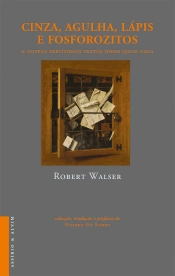
Cinza, Agulha, Lápis e Fosforozitos30%Assírio & Alvim7,99€ 20% + 10% CARD
-
Hojoki30%Assírio & Alvim7,99€ 20% + 10% CARD
BY THE AUTHOR
-
A Paixão do Jovem Werther10%11 X 177,00€ 10% CARD
-
Fausto10%Relógio D'Água28,50€ 10% CARDfree shipping
PEOPLE WHO BOUGHT ALSO BOUGHT
-
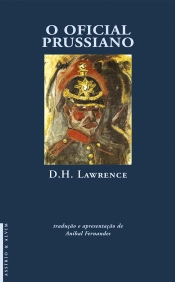
O Oficial Prussiano10%Assírio & Alvim7,75€ 10% CARTÃO
-
A Flor AzulEnvio até 5 dias úteis10%Colares Editora7,50€ 10% CARTÃO