


adicionar à lista de desejos
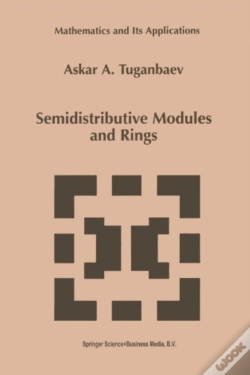
Semidistributive Modules And Rings eBook
language: english
Publisher:
SPRINGER NETHERLANDS, December of 2012 ‧
see product details
59,61€
10% OFF
CARD
VVdGVlVHSTJTV2xqU1VoelozTlBjVWQ1UVVGc1IwNWtkbTFEYm5OTWREbElXa3BtWTFKVU9WbHhUVzFEYlVjMFZWY3JMM3A0VjFwVlRqWjRkRVpvVHpKaFJqUTVaRlJuVFdoVFFXMTBObHBvYWl0elRIWnJhekZCWkRCUWJrdE1iemxTWkUwd05XNVdUbGRRVUdZeVl6SnFTMlZOWkVvelpESkhkRE4wVFZneFJ6QjZXVFpyU1ZWMWFYQTFhMWR3YWpJeVEyTnZPWEZCT1RkeVpsbDBPRlo0TkUxNE0xbFdabGxOUlhkdlMzQTFaRW8wZG5wM1UwMHljbTh2WWtzeFRXOHhjSEpMUTFsbmIxZEpWR1p5WkVoYU5IZEVka2RsYkM5RmJVRnZiME0zV25saU5HeDBhakUwVldSaGVsRmhUWEJCWmt3eGExSnFiVTUxZUM5WGRETmlNWEoyWjNWa1RscHdZV1YwVkdWWE9DdEdRM0F3V0haR1MwaDJZVUZFT0hkblVtMXJRU3RaT1M5dFRITmxOSFo0YzJNeE1XOVZSMUk1UkVWbGJuVjZZbGhPTTNkeVdWWkxNWE01Y0N0SmIzY3ZjVEF5ZHpSQ1VrWkVNMGs1UmtFclQwWklWMEUyTkZwcFFrNHZWVXR4TmxNNVdscGpabXBDUkhoa1NVZE9hV1V2ZUdrM1VXOU9NVEZzWVhSV2JtNHdNVXd6VWtzemF6a3dhVFpvUVhZeVRHcHBTU3MyTlc5VmFWUlVObHB1UVhKR1VDOXFXRFY2Wkhsb1IyeFJhMDVzUVZsVmRVUXJTRmRoVGtoclJFbDNkMnAwV1Zac1FUbFVjSEJPZW1GTlJWTTRjMlpGWlRsUVZWbE9TazE1ZG5sMmRuRjJTelJoWkU1TGNsTXhVamgxYUZRM09HbDZjMmxtYTFocWFUTk1iRWMwY2twbE5sUk5WamQzUVVwdGQwTnFPRXRuYjNGVVEycHBlRUpFVEVSR2VuVmFZMHd6V2pSdWJIZ3dNMlVyTURVeVZuRnBiVEJyTUU5WmQxZzVVbTl1V0dkUk1TOXRUbVZVZDFScGNsbEpTV3hWYjNGS2MzVmhkVGRWWWpoc2FraG5MemhtTjBSRmNreHFSSFJCZEVaVWFtRm5WMmRaV0hwblFVbzRVVVk1TkZveVZsaFJTRlJDVmtOSVNWUkVRMFJWVWtsT1QyUllOVVIwWlN0dWNuQmhlbnBGYnk5dFptaDBUMnhJYjB4RFpUaEdVbTlaTml0bFRsRXdObk5PY213MU1HWlFkMUkyVjNaNmJEVjBjV2xPU0hwMGRWWlhVV05qUFE9PTozREVUdFBKakhhYXFmYkNjL2lReTRBPT0=
IMMEDIATE AVAILABILITY
Ebook for ADE
SYNOPSIS
A module M is called distributive if the lattice Lat(M) of all its submodules is distributive, i.e., Fn(G + H) = FnG + FnH for all submodules F,G, and H of the module M. A module M is called uniserial if all its submodules are comparable with respect to inclusion, i.e., the lattice Lat(M) is a chain. Any direct sum of distributive (resp. uniserial) modules is called a semidistributive (resp. serial) module. The class of distributive (resp. semidistributive) modules properly cont.ains the class ofall uniserial (resp. serial) modules. In particular, all simple (resp. semisimple) modules are distributive (resp. semidistributive). All strongly regular rings (for example, all factor rings of direct products of division rings and all commutative regular rings) are distributive; all valuation rings in division rings and all commutative Dedekind rings (e.g., rings of integral algebraic numbers or commutative principal ideal rings) are distributive. A module is called a Bezout module or a locally cyclic module ifevery finitely generated submodule is cyclic. If all maximal right ideals of a ring A are ideals (e.g., if A is commutative), then all Bezout A-modules are distributive.
DETAILS
| Property | Description |
|---|---|
| ISBN: | 9789401150866 |
| Publisher: | SPRINGER NETHERLANDS |
| Release Date: | December of 2012 |
| Language: | English |
| Format: | eBook |
| File Format and Compatibility: | PDF para ADE |
| Collection: | Mathematics And Its Applications |
| Categories: |
eBooks in English
>
Science
>
Mathematics
|
| EAN: | 9789401150866 |
BOOKS FROM THE SAME COLLECTION
-
10%Diffusions And WavesKluwer Academic Publishers112,89€ 10% CARDfree shipping
-
10%Topics In Engineering MathematicsKluwer Academic Publishers112,89€ 10% CARDfree shipping