
adicionar à lista de desejos
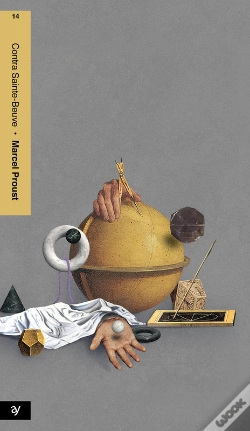
Contra Sainte-Beuve eBook
language: brazilian portuguese
Publisher:
Editora Âyiné, May of 2021 ‧
see product details
8,99€
10% OFF
CARD
YzBKbFVFUmlhV0l6ZUVOUmVGRktOR0ZsWnpaWk0wSkNOekpqS3poR1JpdFhSbEYyY1ZkalIzbEdla1pyU0ZFNE1scE9Sa2ROZGtkR1RXRjJWMmM0TUZWT2VWQkNMMFJXYlVGUldHcDBlV2czV1RsQmNHMHdTbkptZFVvM2F6UnRVa2xrVWpOak9VaFpWbXB3T1dzeU5VRXdXWGxSTm1RemIyODFRVEJ0TUdOQ1REQnVkemhtV2xobWJrNUxaV3BaVUhJeEsyMXZaVWREVVc1b2VqbFVNU3RIVmpGNGNIZzRVSEZWVTJKUlExRnpWRWxIYUU1WVVrMVlVblJqTldoaVkwMUxiMmxFV213d1NFbHlUWEV3V0VST1ZucDVOVWR1ZGtac2RrcG1hRTFFZW5sYU1XZFBNWEJJZVVkaWNtODFaMjV6WkRoVVdYWk5RbnBwZHpWV2NIUklXSHB0V0RCc01uZG1jMDgxTjJ0UmVtUm5OblJ5WmpKRmFtODVNRVV2WjFKbWNYUlBjbkJ0VjIwd0swcE1hVlpCTVdGU2NXRk5OMU52VTJkc1MwTlFSekJRWkRkT09VVkpSRU00T1dOUVV6RmhhVVJLTURSRlNpOUtURzFQYVZObGJHZHNjMVpUY0hsd2MzbFdhV3czVG1SalFtSXhiVXMxYzBoeVVDdDNURFpyUkU1SU1rRlZWVEpQV0V4V09XZE1iVmhOT1dGTlNXTklMMms1U1M5SU5UTnNiekJsUlRjeGNHeHJSakJXTkRGMFp6WkxOR3RwVkRGbFREaERNakJYYWxZdmQxbFhSVFJaT1ZsUGJEbERla2RCY2pOemFXdzBlRm8xT0ZCc1RsSlBaMkZ2YzBaR2FrRTNTVGMyYWxka1VsbG1ORUY1TlRRMFRpOVRWamRCUVVaQmRUazFhMk0zVkhOVVNVWm1XSFJQVWpabVRGZEtjbUU1TDJaVWIxaEdXWFFyVVhBM01FSXlkbTl2VGtkdlpuUjRWMWRFUVd0TU5sbFNjM1kwTmpCRlQzZG1hbWcxTmpWaE9HbGlUMGR3YTBsU2FHVmtTbkJGWkZSNFVIbG5PVGxxWmpoSlZUQmhia1IwVERseGNrdEdVVUp5ZWtOUE1Xc3dVMU5wV1dGWWQzVjRjV0ZNUVV0S1NTdGhURlZKTW1OSk5rOHdiMkkzZURoT2N6UnRjbWcxYlZaWFIyd3hhM00wVldseE1HeE5OVEZaZG1SM1RrMTJjaTh6YlZneVZuaHNkbXgwWm5jeU9WVjZabmRUYkZnNGFXcGFXUzl3UW1kalZ5czFZbmhCWkd0c01XVlBObGhqUFE9PTpianpQRU90S2F2cU1RSjRiejFveEZRPT0=
IMMEDIATE AVAILABILITY
Ebook for WOOK READER
SYNOPSIS
Contra Sainte-Beuve é o livro sombra de Em busca do tempo perdido. Antes de escrever sua obra-prima, Marcel Proust elabora neste livro as suas considerações mais profundas sobre a necessidade de escrever. Encontra-se aqui o arcabouço teórico de Em busca do tempo perdido. Proust revela o significado de sua escrita: dar forma à memória pessoal, fazê-la emergir de objetos vistos como ordinários. Escrever para dar uma marca da própria existência, que do contrário estaria perdida, na convicção de que nada parecido fora escrito antes. Contra Sainte-Beuve é um texto de extraordinária intensidade, sobretudo por sua forma direta.Misto de crítica literária e confissão pessoal, é um documento único da construção de uma obra imortal. Se na Busca do tempo perdido, de fato, é encenada a esplêndida construção artística é somente em Contra Sainte-Beuve que se há a oportunidade de sentir o pensamento em ato que se esconde por trás da obra-prima.
DETAILS
| Property | Description |
|---|---|
| ISBN: | 9786586683899 |
| Publisher: | Editora Âyiné |
| Release Date: | May of 2021 |
| Language: | Brazilian Portuguese |
| Pages: | 228 |
| Format: | eBook |
| File Format and Compatibility: | |
| Categories: |
eBooks in Portuguese
>
Fiction
>
Essays
|
| EAN: | 9786586683899 |
ABOUT THE AUTHOR
Marcel Proust
French novelist and critic, he was born on July 10, 1871 in Auteuil, near Paris, and died on November 18, 1922, in the French capital. He was a weak and asthmatic child, but also with a precocious intelligence and sensitivity. Until the age of 35 he moved in the circles of Parisian society. After the death of his parents, he isolated himself in his apartment in Paris, where he devoted himself deeply to the composition of his masterpiece, A la recherche du temps perdu (In Search of Lost Time, 1914-27). This immense autobiographical novel consists of seven volumes in which he expresses his memories through the paths of the subconscious, and is also a precious reflection on life in France at the end of the nineteenth century. Proust is considered the precursor of the contemporary novel.
Marcel Proust graduated in Law (1893) and Literature (1895). During his years of study he was influenced by the philosophers Henri Bergson, his uncle, and Paul Desjardins and by the historian Albert Sorel. In 1896 he published les Plaisirs et les jours , a collection of verses and short stories of great value and depth, many of which appeared in the magazines le Banquet and la Revue Blanche. The magazine le Banquet (1892) was founded by Marcel Proust himself together with friends. It was at this time that he published his first literary works and biographies of painters. He translates Ruskin, rehearses the novelistic account of his spiritual trajectory by composing Jean Santeuil, a work that will silence him because it seems rushed and too close to his diary.
The death of his father (1903), mother (1905) and a close friend pushed him into solitude, but he remained financially independent and free to write. It is through reflection that he develops the work Contre Sainte-Beuve, composed in 1907, he is already close to the great book A la recherche du temps perdu. In 1909 he deprived himself of all social life and almost all kind of communication. In 1912 the first extracts from the work were published in the newspaper "le Figaro". Proust creates a grandiose work, written in the first person. An exception in the narrative, Un Amour de Swann is the story of an era. The outer world and the inner world are originally identified. Traveling through time, he problematizes modernity and the mechanical existence to which it has condemned us. It is a work carried out in the reencounter of a lost life and that is prolonged, on the other hand, in a suggested metaphysics, as is the case of the episode of the cup of tea in which Proust wants to convey to us that authentic reality lives in our unconscious and only an involuntary journey through memory leads us to contact with it. A la recherche du temps perdu is an allegorical story of his life, from which events and places are taken. The author projects his own homosexuality onto the characters, considering it, as well as vanity, snobbery and cruelty, the greatest symbol of original sin.
Proust is considered a precursor of the new criticism and founder of thematic criticism. He also published in 1919 Pastiches et mélanges.
BY THE AUTHOR
-
Em Busca do Tempo Perdido I10%Clássica Editora11,90€ 10% CARD
-
Do Lado de Swann10%Relógio D'Água16,00€ 10% CARDfree shipping