


adicionar à lista de desejos
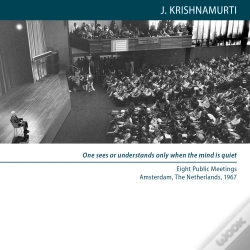
One Sees Or Understands Only When The Mind Is Quiet. Audiobook
Eight Public Meetings - Amsterdam The Netherlands 1967
language: english
Publisher:
KRISHNAMURTI FOUNDATION TRUST, January of 2018 ‧
see product details
14,99€
10% OFF
CARD
V1RkbFVFRTJNamczWTFsSVUzcE5OMUUyWVZGdE1FZDFNRkV3Y0dKalVYRnJTVE50TUhWR2NETmtibEZxYm05bVVuTnlTMWhWV2pOdU5tcExZbXRyVUZoaWNIUktUVm95ZW5sV2JuTlZTa2RwVjBOdVkxRmtZMXBHVWxoSEwyNWpLM2xtYXpCR09WSnVabXQxZW14cVpEWnVRM1phVG1KMmFVOVRSa0pEZFVwYUwzTk1TRVY2UzB4ak1ra3laMGdyZWxScmRIa3lZamd3UTFsVVowUTVNbFZGVDI5TE1VNW5ha0p0V0hWamNIVmhVbm9yY0VFek0wWmpSVlZZYkdGaE5FbHlTWGMyTVhoUEsyWldhbUZYYlVWUk5DdHJkelZWYlZrd1FqSmxaR2xZZGtOVldtUnhSMlJqYzFSak5rNVdWbEZXVFZKdmRYZFhNa1pCTTBaWFUwRkVNa2M1UkZnNWRuTlVXRTVaUmtzeVNGVnJja3hyWkdOTWJVSnhkekJRYlV4c2VXRkxkVGw1YVZSQk9XTjVNVzFvVGpCdFFVOXFabVZYTXk5elFXMVNjbmw2Um5neVVVbG9Va3A2ZG1Nd2FIZG1PRU5qVTBSS1lVWXpPWGxXT0VKWGNYZHpkU3R6UlVsUlJrOHpZMjEzVDJ4d1JWQkdUemxITlZONU1VNUJRWEZET0ZkMldUSnNaVFp1YkVWUVowOURNWHBZVVhsSlFVWkVRVlJNTURCUlJ6WnlLekZ2TmpObGMxQlhlVlJWYWtSa1VESjBRWEJ2YlROaWFWSjNkVE5HYWsxeGRrRlZObkpzV25GbGMzSm1TWE5XTDA1ellXdElMMVkxT0ZwTGNFTnFMMlJKVTFGc09GWm5TblJKZW1WVVlXUmlPRk51VTJGSmN5dHBjVUZVWW5wb1drdEhNVVJMV0hsVFJHVkRRa1pQVUd0TWFIRlFUVVZSTnpsM1JreHVSVVpLVkZBdk1pOXFZMnQ0VFdoUWRqSklXVmh3VFc1TmRVTkdWVlZPUVZwUk5GZzRabkY2YlZaRGNqaE9TVmM1VEVwaVJWaDJlamhKWm1sc1RXcHhiVzVWWjBGc2NISlBTRXB3YkV0cGFsbFhaWFpoVTNSWlRWTlhZbHBTYzJSRVVWWjZSVE5hUmpOS1l6Wm9NV3AzWkcxak4xVnBZMlZ3TVU1NVVXcFpWMEZMYXl0YVptZHhjRXhyYkVWcGVGWkNaMVp5TXprM1QyNXpXazVJYlRSNFYycHNjVXhMTDFObVlUVllNMUJ3YVhKWFRVOWhiblZvVkV0MFMxazBOblZ3VVRkbFR6bEhWRGhuUFE9PTovNU02U3U5SUViT0g0c1FYS1hYYXVnPT0=
IMMEDIATE AVAILABILITY
Audiobook for WOOK READER
SYNOPSIS
1. To look without a concept is to be aware of the observer and the thing observed - 20 May 1967 Duration: 88 minutes • Violence and sorrow are not limited to the West or the East; it is part of the human structure, psychologically. • Is it possible to bring about a change radically, a total revolution in the psyche itself, not through time? • The first and last freedom is when the mind is totally free from concepts and the mechanical process of building a formula. • It is an art to look, which is much more important than any art in the world, any painting, music or book; because when we can look so totally and completely, being directly in contact, there is an ending. • Q: If one has cancer, how can one be free from death? 2. Where there is pleasure there is the shadow of pain - 21 May 1967 Duration: 83 minutes • The whole movement of living, which is relationship, is a movement in action. • What is consciousness? When do you say, 'I am conscious, I am aware, I am attentive'? • Is there actually a division between the conscious and the unconscious, or it is a total movement, operating all the time? • The mind that pursues pleasure must inevitably invite its opposite, which is pain. The two go together; they are not separate. • You cannot see totally when you are making effort. • Q: If you love your own child, your attention to your child is fairly complete, but if you are a teacher you cannot give attention to all the students. 3. Is it possible to renew the mind? - 24 May 1967 Duration: 81 minutes • When the mind is living through imagination and thought, it is incapable of living in the complete fullness of the present. • Thought has created time, not chronological time but psychological time. That is, 'I will be,' 'I should be.' • Is it possible for the brain to be quiet, to give an interval between the old and the new? This interval is the timeless nature in which thought cannot possibly enter. • That which has continuity is repetitive, which is time. It's only when time comes to an end there is something new taking place. • To die every day to every problem, every pleasure, and not carry over any problem at all; so the mind remains tremendously attentive, active, clear. • Since love is not desire or pleasure, how does one come upon it? • Q: Is the feeling of responsibility a part of the order and discipline you were talking about? • Q: Why don't people get angry with what you are saying? 4. Can thought stop? - 28 May 1967 Duration: 72 minutes • When there is a process of recognition it is the projection of the past. The mind is always functioning within the field of time, which is of memory. Can the mind go beyond that? • What is pleasure and what is desire? • How is it possible, without control, subjugation or denying, for thought not to allow itself to interfere? • When all authority of every kind is put aside, denied, then you can find out for yourself. • When you are completely attentive, you see. It is only love that sees - not thought, the mind or the intellect. One has to learn how to look, how to hear. • Q: Could you distinguish between what you mean by the word 'recognizing' and 'being aware'? • Q: How is one to break off a concept that one has carefully built? 5. It is only a very silent mind that can actually see - 30 May 1967 Duration: 82 minutes • Conflict exists only when there are two opposing things: fear and non-fear, violence and non-violence. • A mind that is in a state of inquiry is entirely different from a mind that is seeking. Seeking implies effort, conformity, authority and therefore conflict. • Without space in which there is no boundary, the mind is incapable of coming upon immeasurable reality. • It is only a silent mind that can perceive, actually see, not a chattering mind, a controlled mind, a mind that is tortured, suppressed, yielding or indulging.
DETAILS
| Property | Description |
|---|---|
| ISBN: | 9781912875634 |
| Publisher: | KRISHNAMURTI FOUNDATION TRUST |
| Release Date: | January of 2018 |
| Language: | English |
| Format: | Audiobook |
| Length: | 10 hours and 58 minutes |
| File Size | 338.74 MB |
| File Format and Compatibility: | |
| Categories: |
Audiobooks in English
>
Social Sciences and Humanities
>
Philosophy
|
| EAN: | 9781912875634 |
ABOUT THE AUTHOR
J. Krishnamurti
J. Krishnamurti (1895-1986) é considerado por muitos – desde escritores e filósofos até cientistas – um dos grandes pensadores do século XX. Aos 14 anos, foi reconhecido como o próximo Professor Mundial, mas nunca alegou lealdade a nenhuma casta, nacionalidade ou religião, nem se definiu numa autoridade ou guia espiritual.
Filósofo e educador, dedicou a sua vida a captar a atenção dos seus ouvintes e leitores para a urgência de uma mudança interior como meio de criação de uma sociedade diferente, afirmando que «Cada um é, para si mesmo, o mestre e o discípulo». A educação foi sempre uma das suas preocupações. Fundou escolas em diferentes partes do mundo onde crianças, jovens e adultos aprendem, juntos, a viver um quotidiano baseado na compreensão com o mundo e com os outros seres humanos. Com mais de 60 obras publicadas, realiza uma pesquisa essencial sobre a raiz dos problemas humanos: a mente humana.
BY THE AUTHOR
-
10%O Livro da VidaPlaneta16,90€ 10% CARDfree shipping
-
10%Será Isto de que Estás à Procura?Cultura Editora18,50€ 10% CARDfree shipping