adicionar à lista de desejos
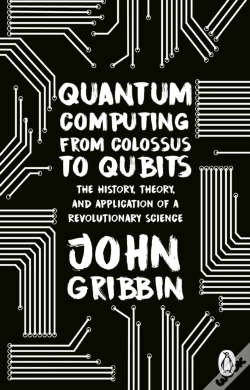
Quantum Computing From Colossus To Qubits eBook
The History, Theory, And Application Of A Revolutionary Science
Livro
eBook
idioma: inglês
Editor:
Transworld, agosto de 2023 ‧
ver detalhes do produto
10,99€
10% DESCONTO
CARTÃO
YTNaeFdsSkhOMVZYTkdsNlRVZERVRk5rT1ZaclN6VmllakF2U0hKUmEyOWlTVkJoVERJdlN6UjJOakEyUjBOWFNVRTJPVE4xWlVsT1owZFVPVE5yVTNsMGNUZHVSVkJHYkZCRVZsWkhWM3BTVUdoRmJHeEVSalpXZFUxa1UyaFNNVXhyYTA1aGRrVXZVVWhsU0daaVprMVdURVpEV21GRE1EbHplSEJxZVhJMFVtcG9TbFY0Vld3MlJuVlpjR2hwV2t0WmRtRlBRbms0WVdKa1JWQnJkbXRLZHpaQlVqVmxORzB6VEhKNVowTXZVbWxrTWpCQlpIUjVMMDFWTmprNU9EWjJORTVwV0VSYUszbzBSRmxOYlZCeVZrVndUbGRrV0d3dlJESjZabkZQZEdGNFpXODVNbGN2V1V3d2FFcDVVMDFETjIxMGVrVkRkbEZtVldoQ1RFUTFVVkEwTm5WWFFUbHVjVVJEUlVRM1dHeGpLM0EyTUZoa1JuZG5NVWhESzB4bWFFWnpTM1kzUVRsTmNGSkhVRlZRZGtOVEwzUjZlRXh1T0VKeVdFTnVXRlZEYjFNeGJIVlZia3RWVUhKelVFZ3JNa0ZEYTJvd2FrTjFVR3ROVlRkcFlUZDNUVzF5TVVacGIxVm1TVU5MUVZwWlMxcDBWazlZWVVsMU4yVlRSVmxXU25acWFHMWFNVVJ2U1hWc1ZEVllaM1pGYUhKNk0xaEJaVWxYZGk5M1pHNTBjMmh1TkhGTFIxYzVaVTV3TDBOSE9WRmtSMDFKVTJkUFVVUnRiekpST0N0a1RDOXNWVTlGZDNWMGNuUm5XREJpVmxGR1pIVmtSemwzYkVOT2NqTnJkU3QwTDBSSk5sbEdaWFFyVFZsRmVUUlJPSEZRZHpOTWVYaFBSWHBGUW5KMlp6UlJTVkZaWWxVclRIVmtiVUVyTkc5eVZEbGFRVXBwVUM5UFpVTTBURkZRVkRCMmVFSTFhMWxxUlZoNWVTdEtkM0JqUkRWVVdVeFpiV05DU1c1VVRETTJOMFZ3YTA5MmNFbGxjMWRHTTFWcVJqQnpXRlJMUkUxNVUwZzRXaXRxT1VkMlVuTXJkWE5tT0dOdlRFUktVRFZPT0dscE1ERlNNbWhSZUhoSE1Xb3JZbnAxV21FNFNubFVNUzlMYzNwQlFtUTVjbWRxZVZObGIzaFBVM1pHVFVwTWNrWk5WRzQ1VjFFMFJ6WXJWVTlzV2xJNGFETlpNbWxDYWpCdVpXNVZkM2xRYXpaSkwybHVSRXB0Y0hOUVZucGxabmh2ZEdwUmIzSjBZVmxRVkdJNU1VOHJlV1pOUFE9PTpXVkl2T2JHd09Ib0lVeWw1MUN1L3BnPT0=
DISPONIBILIDADE IMEDIATA
Ebook para ADE
SINOPSE
The revolution is here. In breakthrough after breakthrough, pioneering physicists are unlocking a new quantum universe which provides a better representation of reality than our everyday experiences and common sense ever could. The birth of quantum computers - which, like Schrödinger''s famous dead-and-alive cat, rely on entities like electrons existing in a mixture of states - is starting to turn the computing world on its head.
In his fascinating study of this cutting-edge technology (first published as Computing with Quantum Cats and now featuring a new foreword), John Gribbin updates his previous views on the nature of quantum reality, arguing for a universe of many parallel worlds where ''everything is real''. Looking back to Alan Turing''s work on the Enigma machine and the first electronic computer, Gribbin explains how quantum theory developed to make quantum computers work in practice as well as in principle. He takes us beyond the arena of theoretical physics to explore their practical applications - from machines which learn through ''intuition'' and trial and error to unhackable laptops and smartphones. And he investigates the potential for this extraordinary science to allow communication faster than light and even teleportation, as we step into a world of infinite possibility.
DETALHES
| Propriedade | Descrição |
|---|---|
| ISBN: | 9781529914061 |
| Editor: | Transworld |
| Data de Lançamento: | agosto de 2023 |
| Idioma: | Inglês |
| Tipo de produto: | eBook |
| Formato e Compatibilidade: | |
| Classificação Temática: |
eBooks em Inglês
>
Ciências Exatas e Naturais
>
Outras ciências
|
| EAN: | 9781529914061 |
| Acessibilidade: | Ver características de acessibilidade indicadas pelo editor |
OPINIÃO DOS LEITORES
Uma perspectiva histórica da computação
Rui Antunes
John Gribbin apresenta uma perspectiva histórica da computação, desde o primeiro computador "clássico" até aos princípios que estão na base da computação quântica. Tipicamente cada capítulo foca-se num dos principais responsáveis de um avanço científico, explicando não só a componente científica mas também a componente mais biográfica. Falta, nos capítulos finais, sobre os princípios da construção de computadores quânticos, alguns diagramas ou esquemas que permitissem auxiliar na compreensão de algo que é efectivamente complexo. Está longe de ser um livro que esclarece completamente o funcionamento da computação quântica, mas como introdução ao tema é muito interessante.
SOBRE O AUTOR
DO MESMO AUTOR
-
30%Os Buracos BrancosPublicações Europa-América13,20€ 20% + 10% CARTÃOportes grátis
-
30%Um Admirável UniversoPublicações Europa-América15,92€ 20% + 10% CARTÃOportes grátis