


adicionar à lista de desejos
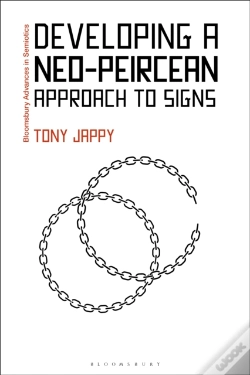
Developing A Neo-Peircean Approach To Signs eBook
Livro
eBook
idioma: inglês
Editor:
BLOOMSBURY PUBLISHING, dezembro de 2023 ‧
ver detalhes do produto
34,57€
10% DESCONTO
CARTÃO
YmtSV01tY3llbVZhTURSWVVXczJOVTFwWkhOUWR6VnNPV1ZFVG1SRFJUWjJZakJIVEVNMk9XbEZVWEJYYVhWdFFVRlBhbVpoU2xWcWQySmxkRFl3WTJGdFIyUTJiREk1VEdadmFrbHVkV3cwYkVkTVUxUkRNR2RoVGs4dmJHcFJkMFpMWTNoVVUyVlRkRWhwUW1KR2VtRnNjM1F4TmtSRU16a3JXRVV6Tm5CRVNuSjZTMElyUjNaWVVGUTNhSG8yWlRWNVJtOWFkV3MwVHpsNFFrWXZkMkpNTDJ3MFQyRlRSelYzVWsxNFRuTjRZV2hDTWk5QlVYQlRSSGczYTFBclpEWjBhbkp1V0RnMk4wUnhkbTlJTVM5QlUySnZiRUZLVTJSV1dsY3hkV1lyUlRWS01Xa3JVemRXU2pGSlV6aHlXbmw1T1U5aVJHZHBTRGhWUWtoemNrcFZTbFpUWnpseWNISjNUM2hRZG5NelpYSkljRGMyV2pCTWRrcHRLMkZ0YzBwNU4ycElSVE13U0VKT1lrMTJSVlJuT0RoTk0yVTBjbFJoVGpWUFYzcElja3BXUTBORVMybDNRMmRYYlc0ellrUXhibVpLY1VOUVZYZEljazF6YlRKdk56VnRZM054VDNkS09ITTFiMFoyU2pNMlpYUkNPVXBhT0RSR05tSnRTVlpHZG05UVRGbDZZMlJ3YjFSUVFVcFFkbFJ6VjFjeldIQklkbXRLUVVwdFZWZHVla2xDU2tGNlJIQkxiVWN2VG5KaWRYbHNUMmxzTHpWdGExTkdUeXRQVjFWc1RIVnhaRk5wZVZCc1VtZEhhbFUwUVdRclUwWlNWVmhTT1dOVmRIQjNWVzB4TnpOTlNHNVRMMEY2TDFWdFdqUnljRkk1YWs5dk4wNXliWE15VFNzNVZGaE5WMnB5YTIwdlVUSlVPWEoxUjBsWGVGcHRhMDgwTW5sTGQwcDJNMWhpYkZOM05XYzRLMnBCWWk5V2FHVTNjREpOVUhob1VXSkJhVWw1U1dSNFpWQTVhVzFWZWk5bmFtRk5PV001Wmt0d2FGVmtOMVYwSzNkNWFEbFFORVJDT1VSTWVISlpRa3hFUjBkdGRUaFZVRlZKT1haSlMwWXhSVFk1VVdWa1pWRkJWazVMVUV0cmIyMHJUVVUwUnpGYWVISjVWbk40U21Vd1RXeFdlRzFNZEhvemVVTXZOVWQ0UlRCUEwzbHNLMFJHU0ZKbEsxbFRSM3BvVkRVcmQyb3pVVFp4VkRSdFNpOVphbTk0VkZNNWNGaDNjSGxZTW5SSWRrUk5TSEJHVFZjek1WQTJXWFJKUFE9PTpCUjYrZ3dmT25NNzdoTnF4UE9GTDJnPT0=
DISPONIBILIDADE IMEDIATA
Ebook para ADE
SINOPSE
This book takes up a number of Charles Sanders Peirce''s undeveloped semiotic concepts and highlights their theoretical interest for a general semiotics.
Peirce''s career as a logician spanned almost half a century, during which time he produced several increasingly complex sign systems. The best-known, from 1903, defined amongst other things a signifying process involving sign, object and interpretant, the universally-known icon-index-symbol division and a set of 10 distinct classes of signs. Peirce subsequently expanded this process to include 2 objects, the sign and 3 interpretants. Uncoincidentally, in the 5 years between 1903 and the final system of 1908, he introduced a number of highly innovative semiotic concepts which he never developed.
One such concept is hypoiconicity, which comprises 3 levels of isomorphism holding between sign and object and, in spite of the mutations these varieties of icon subsequently underwent, offers qualitative analysis as a complement to the traditional literal-figurative binarism in the discussion of verbal and nonverbal signs. Another is semiosis, which Peirce introduced and defined in 1907 but only rarely illustrated. Involving a complex combination of object, perception, interpretation and a medium, this is shown to be a far more complex signifying process than the one implicit in the three-correlate definition of the sign of 1903. Exploring the evolving theoretical background to the emergence of these new concepts and showing how they differ from certain contemporary conceptions of sign, mind and signification, the book proposes an introduction to, and explanations and illustrations of, these important developments.
Peirce''s career as a logician spanned almost half a century, during which time he produced several increasingly complex sign systems. The best-known, from 1903, defined amongst other things a signifying process involving sign, object and interpretant, the universally-known icon-index-symbol division and a set of 10 distinct classes of signs. Peirce subsequently expanded this process to include 2 objects, the sign and 3 interpretants. Uncoincidentally, in the 5 years between 1903 and the final system of 1908, he introduced a number of highly innovative semiotic concepts which he never developed.
One such concept is hypoiconicity, which comprises 3 levels of isomorphism holding between sign and object and, in spite of the mutations these varieties of icon subsequently underwent, offers qualitative analysis as a complement to the traditional literal-figurative binarism in the discussion of verbal and nonverbal signs. Another is semiosis, which Peirce introduced and defined in 1907 but only rarely illustrated. Involving a complex combination of object, perception, interpretation and a medium, this is shown to be a far more complex signifying process than the one implicit in the three-correlate definition of the sign of 1903. Exploring the evolving theoretical background to the emergence of these new concepts and showing how they differ from certain contemporary conceptions of sign, mind and signification, the book proposes an introduction to, and explanations and illustrations of, these important developments.
DETALHES
| Propriedade | Descrição |
|---|---|
| ISBN: | 9781350288829 |
| Editor: | BLOOMSBURY PUBLISHING |
| Data de Lançamento: | dezembro de 2023 |
| Idioma: | Inglês |
| Páginas: | 216 |
| Tipo de produto: | eBook |
| Coleção: | Bloomsbury Advances In Semiotics |
| Classificação Temática: |
eBooks em Inglês
>
Literatura
>
Linguística e Filologia
|
| EAN: | 9781350288829 |
LIVROS DA MESMA COLEÇÃO
-
10%The Semiotics Of The ZodiacBLOOMSBURY PUBLISHING PLC115,59€
128,43€portes grátis -
10%Early Body Ornaments And The Origins Of Our Semiotic MindBLOOMSBURY PUBLISHING PLC115,59€
128,43€portes grátis
-
10%Regards Sur Le Poème Muet ; Petite Introduction À La Sémiotique Visuelle PeirciennePU DE PERPIGNAN29,54€ 10% CARTÃOportes grátis
-
imagem não disponívelSemiotique Percienne: État Des Lieux10%Semiotique Percienne: État Des LieuxPU DE PERPIGNAN17,45€ 10% CARTÃOportes grátis