



adicionar à lista de desejos

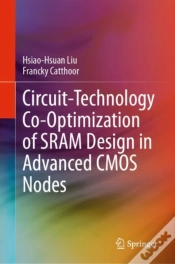
Circuit-Technology Co-Optimization Of Sram Design In Advanced Cmos Nodes eBook
idioma: inglês
Editor:
Springer Nature Switzerland, dezembro de 2024 ‧
ver detalhes do produto
166,94€
10% DESCONTO
IMEDIATO
V0hOb1pta3lTRXRGY2tWSFNuRkZNM2x6SzNCdFMxcFpRVWhJWVhGaE9YaFFRVTlOTjNKUWNEQm1kSE5NVUc5aldVVnpTek5oU0U5WFdrUmxOMlpuVkRScFRubFhWMEZITm1sMmRWTlJhMjEzYzFwTk9UQmlZVk1yYURndmEyZEpUM3BTTkZCdU5VcFJTbVZsZGtoU2JVcDFaRUZJZVRCbmIyWXJSVVVyVm0xdGVXZEZhMHBUWTBwSFNYZFdUWGd5TDIwNFR5ODVRMWh1U0NzeFVIQTJXRGxKZDFZeFZqaEJWMXBWVDFndlMxcGFSelpLU3k5UmJXVnRTMWgyV2pSbmFFUmhNWFpwSzBNMU5rNXdUVlZFU2xWNlkzSmxkVE5LVEVoaVJXdFBWa1ZUVURGRmJVZG5WSFI2TWsxVVdtcE5WVFZuYTFsT1kwSjRXblF3ZFhsTldEQTJjR3BLU1ZCc1MyZHhOazEyUmtGWVdXaGxTWFF2YzNkSFVuZFROMmhwYjNFdk9IWTJZU3RMT0ZOalVVSkhNV1pwZUd0TlRtNUJSMUYzVDB0UE1sTkVSVTR4UjJGU1dsVmxjVGxwZDFoNWVrbG9ka1ZLY0RGamQzSlJlVlYzTW10Q2NDc3dRU3RTVW5CSlQzQm9SVUpVYzBsME4yYzNkR0Y1TDBOMFNrVmxRVkpzVkM5cGVFbHZURTFPUmxSRFRYTnJOM0ZJU1VGMVZUTnJlRWR4VlVkblZHUm5hVGcwZFV0TVNXNUdNV050U3pObVdFMVNZWEYzUjJwRFNYWkJkRU5yWm5sa0syZENMMUl2YWxSMmIyaHRMM1pOWjNoc1ZYZE9SamwyV1RkcFEyMVlORFp6YzFkS1ZHVk5ObUpHZFV4cFdtZFJjVGgzUlRRMVRVUndSbVJwUlhCcVJIWjNWalZrZWtoQ1lta3lWbWxrWlVaclMwNHlXa3BUTlhwTWFFWlNUM0ZZWnpGdGRtVlFTMDQ0UTFocGFuTlhPWFJVUkRsV1YxVnZUVFpXOmhaTmtzM21IMXZSZHJVa0ZVUFpaOFE9PQ==
DISPONIBILIDADE IMEDIATA
Ebook para ADE
SINOPSE
Modern computing engines—CPUs, GPUs, and NPUs—require extensive SRAM for cache designs, driven by the increasing demand for higher density, performance, and energy efficiency. This book delves into two primary areas within ultra-scaled technology nodes: (1) advancing SRAM bitcell scaling and (2) exploring innovative subarray designs to enhance power-performance-area (PPA) metrics across technology nodes.
The first part of the book utilizes a bottom-up design-technology co-optimization (DTCO) approach, employing a dedicated PPA simulation framework to evaluate and identify the most promising strategies for SRAM bitcell scaling. It offers a comprehensive examination of SRAM bitcell scaling beyond 1 nm node, outlining a structured research cycle that includes identifying scaling bottlenecks, developing cutting-edge architectures with complementary field-effect transistor (CFET) technology, and addressing challenges such as process integration and routing complexities. Additionally, this book introduces a novel write margin methodology to better address the risks of write failures in resistance-dominated nodes. This methodology accounts for time-dependent parasitic bitline effects and incorporates timing setup of write-assist techniques to prevent underestimating the yield loss.
In the second part, the focus shifts to a top-down DTCO approach due to the diminishing returns of bitcell scaling beyond 5 Å node at the macro level. As technology scales, increasing resistance and capacitance (RC) lead designers to adopt smaller subarray sizes to reduce effective RC and enhance subarray-level PPA. However, this approach can result in increased inter-subarray interconnect overhead, potentially offsetting macro-level improvements. This book examines the effects of various subarray sizes on macro-level PPA and finds that larger subarrays can significantly reduce interconnect overhead and improve the energy-delay-area product (EDAP) of SRAM macro. The introduction of the active interconnect (AIC) concept enables the use of larger subarray sizes, while integrating carbon nanotube FET as back-end-of-line compatible devices results in macro-level EDAP improvements of up to 65% when transitioning from standard subarrays to AIC divided subarrays. These findings highlight the future trajectory of SRAM subarray design in deeply scaled nodes.
DETALHES
| Propriedade | Descrição |
|---|---|
| ISBN: | 9783031761096 |
| Editor: | Springer Nature Switzerland |
| Data de Lançamento: | dezembro de 2024 |
| Idioma: | Inglês |
| Tipo de produto: | eBook |
| Formato e Compatibilidade: | |
| Coleção: | Engineering |
| Classificação Temática: |
eBooks em Inglês
>
Engenharia
>
Eletricidade e Energia
|
| EAN: | 9783031761096 |
| Acessibilidade: | Ver características de acessibilidade indicadas pelo editor |
LIVROS DA MESMA COLEÇÃO
-
eBook10%Faraday LaserSpringer Nature Singapore190,21€
211,34€ -
eBook10%Dictionary Of Concrete TechnologySpringer Nature Singapore417,37€
463,74€
-
10%Circuit-Technology Co-Optimization Of Sram Design In Advanced Cmos NodesSpringer International Publishing AG121,66€
135,18€portes grátis
-
10%Workload Dependent Mitigation Approaches For Performance VariabilitySpringer International Publishing AG121,66€
135,18€portes grátis -
10%Neuromorphic Solutions For Sensor Fusion And Continual Learning SystemsSpringer International Publishing AG121,66€
135,18€portes grátis