

adicionar à lista de desejos
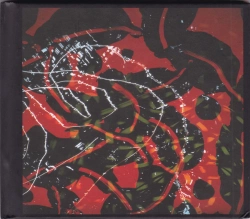
Nerve Net - CD Music
label:
All Saints Records, January of 2014 ‧
see product details
OUT OF STOCK OR NOT AVAILABLE
ARTICLE DESCRIPTION
ALIGNMENT
Nerve Net
1
01 - Fractal Zoom
02 - Wire Shock
03 - What Actually Happened?
04 - Pierre In Mist
05 - My Squelchy Life
06 - Juju Space Jazz
07 - The Roil, The Choke
08 - Ali Click
09 - Distributed Being
10 - Web
11 - Web (Lascaux Mix)
Appendix:
12 - Decentre
My Squelchy Life
2
01 - I Fall Up
02 - The Harness
03 - My Squelchy Life
04 - Tutti Forgetti
05 - Stiff
06 - Some Words
07 - Juju Space Jazz
08 - Under
09 - Everybody's Mother
10 - Little Apricot
11 - Over
DETAILS
| Property | Description |
|---|---|
| label: | All Saints Records |
| Release Date: | January of 2014 |
| Dimensions: | 125 x 140 x 8 mm |
| Format: | Music |
| Categories: |
Alternative/Indie
>
Experimental/Industrial/EBM
|
| EAN: | 0801061103125 |
| Duration (m): | 114 |
| Number of disks: | 2 |
| Format: | CD / Album |
ABOUT THE ARTIST
Brian Eno
Brian Eno is one of the most influential and innovative musicians, songwriters, and producers in the history of contemporary music. Born on May 15, 1948 in Woodbridge, Suffolk, England, Eno is often credited as one of the originators of the concept of ambient music and is recognized for his visionary work in music production, as well as his own career as a solo artist. Over several decades, Eno has played a crucial role in transforming pop, rock, and electronic music, challenging conventions and pushing the boundaries of what music can be.
Brian Eno began to gain notoriety in the early 1970s as a member of the experimental rock band Roxy Music. Although he initially joined the band as a keyboardist and sound manipulator, Eno quickly stood out for his innovative approach to music, using synthesizers and electronic effects to create complex and atmospheric soundscapes. After recording two albums with Roxy Music, Roxy Music (1972) and For Your Pleasure (1973), Eno left the band to pursue a solo career.
Eno's first solo album, Here Come the Warm Jets (1974), showed his ability to combine experimental rock with elements of pop music, resulting in a sound that was both accessible and avant-garde. This album, along with Taking Tiger Mountain (By Strategy) (1974), Another Green World (1975), and Before and After Science (1977), are often considered milestones in experimental and art rock music. On these albums, Eno explored new forms of composition and production, often using unconventional recording techniques and collaborating with other innovative musicians such as Robert Fripp, Phil Collins and John Cale.
In the mid-1970s, Eno began to develop the concept of "ambient music," a genre he described as "a music that can be both ignored and appreciated." The album Discreet Music (1975) is an early example of this style, which Eno continued to explore on albums such as Music for Airports (1978), Ambient 4: On Land (1982), and The Pearl (1984), the latter a collaboration with pianist Harold Budd. Eno's ambient music is characterized by soft, repetitive, and atmospheric sound textures that are designed to create an immersive and relaxing environment, differing from traditional forms of music that have a defined structure and melody.
In addition to his solo work, Eno has become one of the most respected producers in popular music, working with some of the biggest names in rock and electronic music. He collaborated with David Bowie on the famous "Berlin Trilogy," which includes the albums Low (1977), "Heroes" (1977) and Lodger (1979). These albums were instrumental in the development of electronic and experimental rock music, combining elements of ambient music with traditional pop and rock structures.
Eno also had a long and fruitful collaboration with the Irish band U2, producing iconic albums such as The Unforgettable Fire (1984), The Joshua Tree (1987) and Achtung Baby (1991). His work with U2 was crucial to the band's sound during the '80s and '90s, helping to transform the group into one of the biggest rock bands in the world.
Eno continued to explore new musical directions over the decades, collaborating with a wide range of artists, including Talking Heads, with whom he worked on albums such as More Songs About Buildings and Food (1978) and Remain in Light (1980). Its influence can be felt in almost every genre of contemporary music, from rock and pop to electronic and experimental music.
In addition to music, Brian Eno is known for his work in other art forms, including art installations, where he applies the same principles of ambience and immersion that characterize his music. He has also been an advocate for digital technologies and generative art, exploring how technology can be utilized to create music and art that constantly changes and never repeats itself.
With a career spanning more than five decades, Brian Eno continues to be a central figure in contemporary music and art. His ability to innovate and challenge established conventions has earned him a place as one of the most important and influential artists of our time. Eno is not just a musician or producer; He is a true visionary, whose influence and impact transcend music, reaching the mastery of art and culture in general.
BY THE SAME ARTIST
-
Apollo - Vinil10%UMC57,67€ 10% CARDfree shipping
-
Before And After Science - Vinil10%Astralwerks39,27€ 10% CARDfree shipping