




adicionar à lista de desejos
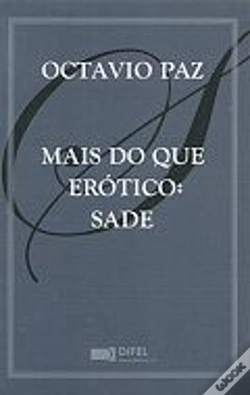
SYNOPSIS
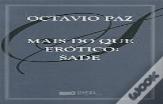
O Marquês de Sade (1740-1814) atraiu sempre a controvérsia. Condenado por alguns como um monstro e aclamado por outros como um apóstolo da liberdade sexual, Sade passou três décadas da sua vida na prisão – os seus manuscritos foram queimados e os livros banidos.
Quando, ainda jovem na Paris do pós-guerra, Octavio Paz encontrou pela primeira vez os escritos do Marquês de Sade, a sua reacção foi de “espanto e horror, curiosidade e repugnância, admiração e reconhecimento”.
Num primeiro poema e dois ensaios subsequentes escritos durante um espaço de cinco décadas, Paz penetrou a limitativa imagem de Sade como apenas um pornógrafo e examinou a sua obra no contexto do paradoxo da liberdade humana e do homem civilizado. Insiste que vale a pena ler Sade, que o perigo reside não nos seus livros mas nas paixões dos seus leitores.
Uma exuberante afirmação de vida, Mais que um Erótico: Sade é filosofia de primeira ordem, com uma dose de autoridade e de irreverência que provocará seguramente conversa e debate.
Quando, ainda jovem na Paris do pós-guerra, Octavio Paz encontrou pela primeira vez os escritos do Marquês de Sade, a sua reacção foi de “espanto e horror, curiosidade e repugnância, admiração e reconhecimento”.
Num primeiro poema e dois ensaios subsequentes escritos durante um espaço de cinco décadas, Paz penetrou a limitativa imagem de Sade como apenas um pornógrafo e examinou a sua obra no contexto do paradoxo da liberdade humana e do homem civilizado. Insiste que vale a pena ler Sade, que o perigo reside não nos seus livros mas nas paixões dos seus leitores.
Uma exuberante afirmação de vida, Mais que um Erótico: Sade é filosofia de primeira ordem, com uma dose de autoridade e de irreverência que provocará seguramente conversa e debate.
DETAILS
| Property | Description |
|---|---|
| ISBN: | 9789722905466 |
| Publisher: | Difel |
| Release Date: | April of 2001 |
| Language: | Portuguese |
| Dimensions: | 190 x 121 x 8 mm |
| Cover: | Softcover |
| Pages: | 76 |
| Format: | Book |
| Collection: | Pequenos Textos de Grandes Autores |
| Categories: |
Books in Portuguese
>
Fiction
>
Other Literary Forms
|
| EAN: | 9789722905466 |
| Recommended Minimum Age: | Not applicable |
ABOUT THE AUTHOR
Octavio Paz
NOBEL PRIZE FOR LITERATURE 1990
A prolific Mexican writer and poet, Octavio Paz was born on March 31, 1914, in Mexico City. The son of a journalist who became secretary to the revolutionary Emilio Zapata and grandson of an author of novels dedicated to indigenous martyrdom, he benefited from his grandfather's extensive library, becoming interested in literature from an early age.
With the assassination of Zapata in 1919, Octavio Paz's family was forced into exile, spending some time in the United States of America. Back in Mexico, he enrolled in the law course at the National University but, aspiring to become a poet, he did not obtain his diploma. He made his debut in 1933 with the publication of his first collection of poems, Luna Silvestre.
In 1937 he left for Spain, with the intention of taking a seat at the Second International Congress of Anti-Fascist Writers, taking place in the city of Valencia, but ended up fighting in the Republican ranks during the Spanish Civil War. He had the opportunity to meet colleagues such as Ilja Ehrenburg, André Gide and André Malraux.
Sympathizing with communist ideals, he published in the same year of 1937 Bajo Tu Clara Sombra y Otros Poemas and No Pasarán!, works that reflect his experiences on Spanish soil. In 1938 he participated in the founding of a magazine, Taller, which sought to establish a new generation of writers in Mexico, yearning for freedom in shades of surrealism. In 1943 he traveled to the United States of America with a scholarship awarded by the Guggenheim Foundation, making contact with modernist poetry at the University of Berkeley.
In 1945 he entered the service of the Mexican Diplomatic Corps and was sent to Paris, where he wrote Liberdad Bajo Palabra (1949) and El Laberinto De La Soledad (1950). He published his first experience in poetic prose in 1951, with the title Águila O Sol?, and in 1956 he appeared El Arco Y La Lira, an essay on French and Spanish literature. After composing Piedra De Sol (1957) and serving a mission in Japan, Octavio Paz was appointed Mexico's ambassador to India in 1962. He ended up resigning in 1968, as a sign of protest against the massacre of students in Tlateloco Square, who were demonstrating against the government shortly before the Olympic Games in Mexico.
He then pursued an academic career, marked by his passage through prestigious institutions such as the universities of Cambridge and Harvard, maintaining his editorial activity. He has been awarded numerous prizes, including the Neustadt in 1982 and the Nobel Prize for Literature in 1990.
Octavio Paz died on April 19, 1998.
Octavio Paz. In Infopédia. Porto: Porto Editora, 2003-2011.
BOOKS FROM THE SAME COLLECTION
-
Adriana MaterDifel8,08€
-
Para Lá da Boca do DragãoDifel8,08€
BY THE AUTHOR
-
Piedra Y Sol10%VISOR LIBROS, S.L.14,27€ 10% CARD
-
Antologia (Octavio Paz)10%RAE21,31€ 10% CARDfree shipping