


adicionar à lista de desejos
SYNOPSIS
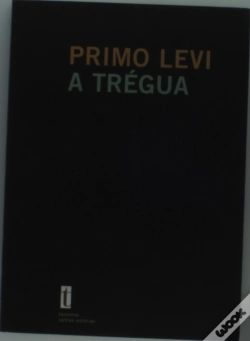
Primo Levi (Turim, 1919-87) inscreveu seu nome entre os maiores escritores do século XX, a partir da experiência de prisioneiro e sobrevivente do campo de extermínio de Auschwitz. Sua prosa literária tem a força expressiva das narrativas em que a voz da testemunha alia-se ao trabalho da memória e da recriação da vida nos limites máximos da dor e da destruição. A trégua narra a longa e incrível viagem de volta para casa depois da libertação de Auschwitz e do fim da guerra. Numa Europa semi-destruída, o autor e vários companheiros de estrada viajam sem destino pelo Leste até a URSS, entre as ruínas da maior de todas as guerras e o absurdo da burocracia dos vencedores.
DETAILS
| Property | Description |
|---|---|
| ISBN: | 9789726955757 |
| Publisher: | Editorial Teorema |
| Release Date: | December of 2004 |
| Language: | Portuguese |
| Dimensions: | 167 x 233 x 20 mm |
| Cover: | Softcover |
| Format: | Book |
| Categories: |
Books in Portuguese
>
Fiction
>
Memories and Testimonies
|
| EAN: | 9789726955757 |
ABOUT THE AUTHOR
Primo Levi
Primo Levi was born in Turin in 1919 and committed suicide in that city in 1987. A trained chemist, he participated in the Resistance, was arrested, and interned in the Auschwitz concentration camp. Along with Calvino and Pavese, he is one of the leading figures of the Italian postwar generation. He became known for authoring several books about his experiences in those camps – among them the book... If this is a man This is the most famous example – as well as in short stories and novels. That's how Auschwitz was."This book, written with Leonardo De Benedetti and edited by Fabio Levi and Domenico Scarpa, brings together an admirable collection of texts, previously unpublished in Portugal, about the experience of the extermination camps. 'That is the experience from which I emerged and which marked me profoundly; its symbol is the tattoo I still carry on my arm: my name from when I had no name, the number 174517. It marked me, but it didn't diminish my desire to live. It increased it, because it gave my life a purpose: to bear witness, so that nothing similar ever happens again. This is the purpose of my books.'"
(see more)BY THE AUTHOR
-
Se Isto é um Homem10%Dom Quixote17,70€ 10% CARDfree shipping
-
Os que Sucumbem e os que se Salvam10%Dom Quixote17,70€ 10% CARDfree shipping