Nicolau de Cusa
Nicolau de Cusa (1401–1464) nasceu em Cusa, na Alemanha, e foi bispo e cardeal da Igreja de Roma. Fez a sua formação em Heidelberg, em Pádua (onde contactou com o primeiro humanismo) e em Colónia. Homem e pensador de elevada estatura e densidade na passagem da Idade Média para a Idade Moderna, junta a uma atividade eclesial intensa uma profunda capacidade especulativa que faz dele um dos maiores vultos do pensamento alemão. Encarregado de várias missões na Alemanha e nos Países Baixos, como legado pontifício, e com um bispado em Brixen bastante atribulado pelos conflitos que o opuseram ao Duque Segismundo de Áustria, chegou a ocupar um lugar de destaque na hierarquia eclesiástica como vigário-geral do Estado Pontifício. Mas, ao mesmo tempo, deixou-nos uma obra de invulgar profundidade, na qual, além de temas matemáticos e cosmológicos, aborda, com uma marcada influência neoplatónica, grandes questões filosóficas, místicas e teológicas. Entre as suas obras destacam-se A Douta Ignorância, As Conjeturas, O Idiota, A Visão de Deus e A Caça da Sabedoria, mas as suas preocupações ecuménicas levaram-no igualmente a escrever um diálogo intitulado A Paz da Fé, autêntico hino à concórdia entre os povos. Morreu em 1464, em Todi. Considerado um dos antecipadores da moderna metafísica do sujeito, o seu pensamento influenciará Giordano Bruno, ecoará no romantismo alemão e, por vias indiretas, em alguns dos expoentes do idealismo.
Share
Bibliography
-
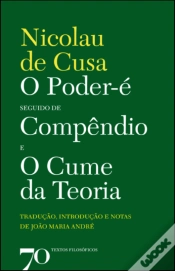
10%O Poder-é seguido de Compêndio e O Cume da TeoriaEdições 7008-202515,21€
16,90€free shipping -
A Paz da FéEdições Minerva Coimbra05-200910,10€
-
A Douta IgnorânciaFundação Calouste Gulbenkian04-200315,15€
-
imagem não disponívelA Visão de DeusA Visão de DeusFundação Calouste Gulbenkian04-19885,54€