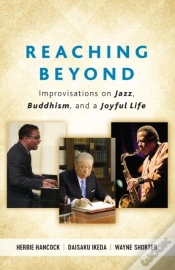
Herbie Hancock
Herbie Hancock, born Herbert Jeffrey Hancock on April 12, 1940, in Chicago, Illinois, is one of the most innovative and influential musicians in the history of jazz and contemporary music. A pianist, composer, and producer, Hancock is known for his ability to transcend musical genres, integrating elements of traditional jazz, funk, electronic music, and rock, while maintaining a creative and exploratory approach.
Hancock began his career as a child prodigy, demonstrating precocious talent for the piano. After studying electrical engineering and music, he was discovered by Donald Byrd, who introduced him to the world of professional jazz. In 1962, he released his debut album, Takin' Off, which included the classic "Watermelon Man", a composition that catapulted him to fame in the jazz scene.
In 1963, Hancock joined Miles Davis' quintet, becoming a centerpiece in Davis' "second great quintet" lineup. During this period, Hancock participated in iconic albums such as E.S.P. and Miles Smiles, which marked a new era of modal and post-bop jazz. His experience with Davis profoundly influenced his style, encouraging him to explore new sounds and techniques.
In the 1970s, Hancock stood out as a pioneer in the fusion of jazz with funk and electronic music, creating revolutionary works such as Head Hunters (1973). This album, which includes the track "Chameleon", became one of the best-selling albums in jazz history and defined the jazz-funk genre. With his innovative use of synthesizers and electric keyboards, Hancock broke new ground, inspiring musicians from a variety of genres.
Hancock continued to reinvent himself in the following decades, exploring everything from acoustic jazz to pop music. In 1983, he achieved huge success with the album Future Shock, which included the track "Rockit", one of the first songs to popularize the use of scratch and innovative music video. This period reaffirmed his status as an artist who constantly breaks barriers.
Throughout his career, Herbie Hancock has received numerous awards, including several Grammy Awards, an Academy Award for Best Soundtrack for Round Midnight (1986), and the honor of being named a UNESCO Goodwill Ambassador. His influence spans generations, both in music and in music technology.
With a career spanning over six decades, Herbie Hancock continues to be a vital force in global music, inspiring musicians and audiences around the world with his creativity and innovation. His legacy as one of the greatest visionaries of jazz and modern music is unquestionable, and his relentless search for new musical horizons secures his place as a true music icon.
Hancock began his career as a child prodigy, demonstrating precocious talent for the piano. After studying electrical engineering and music, he was discovered by Donald Byrd, who introduced him to the world of professional jazz. In 1962, he released his debut album, Takin' Off, which included the classic "Watermelon Man", a composition that catapulted him to fame in the jazz scene.
In 1963, Hancock joined Miles Davis' quintet, becoming a centerpiece in Davis' "second great quintet" lineup. During this period, Hancock participated in iconic albums such as E.S.P. and Miles Smiles, which marked a new era of modal and post-bop jazz. His experience with Davis profoundly influenced his style, encouraging him to explore new sounds and techniques.
In the 1970s, Hancock stood out as a pioneer in the fusion of jazz with funk and electronic music, creating revolutionary works such as Head Hunters (1973). This album, which includes the track "Chameleon", became one of the best-selling albums in jazz history and defined the jazz-funk genre. With his innovative use of synthesizers and electric keyboards, Hancock broke new ground, inspiring musicians from a variety of genres.
Hancock continued to reinvent himself in the following decades, exploring everything from acoustic jazz to pop music. In 1983, he achieved huge success with the album Future Shock, which included the track "Rockit", one of the first songs to popularize the use of scratch and innovative music video. This period reaffirmed his status as an artist who constantly breaks barriers.
Throughout his career, Herbie Hancock has received numerous awards, including several Grammy Awards, an Academy Award for Best Soundtrack for Round Midnight (1986), and the honor of being named a UNESCO Goodwill Ambassador. His influence spans generations, both in music and in music technology.
With a career spanning over six decades, Herbie Hancock continues to be a vital force in global music, inspiring musicians and audiences around the world with his creativity and innovation. His legacy as one of the greatest visionaries of jazz and modern music is unquestionable, and his relentless search for new musical horizons secures his place as a true music icon.
Bibliography
format
Book
eBook
Music
Order
Edition Date
Ranking
-
Reaching BeyondeBookMIDDLEWAY PRESS02-20170,00€
-
Reaching BeyondeBookMIDDLEWAY PRESS02-20170,00€
-
Herbie Hancock: PossibilitieseBookPenguin Publishing Group10-20140,00€