Émile Zola
Émile Zola was born in 1840 in Paris. He grew up in Aix-en-Provence, where he studied at the Collège Bourbon, returning to Paris to continue his studies. Struggling with financial difficulties after his father's death, he worked in offices and collaborated on several newspapers. With the entry into Hachette, Zola began in the world of literature, meeting writers such as Taine, Stendhal, Balzac and Flaubert. He published his first poems, short stories and articles and, at the age of twenty-five, exchanged his initial vocation as a poet for that of a novelist, writing La Confession de Claude. From then on, he lived as a journalist and novelist, publishing Le voeu d'une morte (1866) and Thérèse Raquin (1867), a work that affirmed his naturalist aesthetics, integrating theories of his time such as Darwinism, evolutionism and scientific determinism. Inspired by Balzac's The Human Comedy , in 1871 he began the Rougon-Macquart series, which he subtitled Natural and social history of a family under the Second Empire. It includes Nana (1880) and Germinal (1885), two of his main works. However, in 1880, he had published O Romance Experimental, a literary manifesto of the naturalist movement. For Zola, the novelist was an observer of Nature, adopting an experimental attitude and working with social and emotional facts as a chemist works with his matter. His books covered topics as diverse as the miners' strikes in Germinal, the alcoholism of the working classes in L'Assommoir, the sexual decadence of the wealthy classes in La Curée and the connection of peasants to their land in La Terre. Some of his works were considered scandalous at the time, and he was never chosen for the French Academy, to which he was a candidate twenty-four times. In 1898, Zola participated in the public debate on the Dreyfus Affair, defending the innocence, which would be proven, of the accused. His article 'J'accuse', published in L'Aurore, eventually led to the review of the court case. But its publication caused him to be prosecuted and sentenced to a year in prison, which led him to go into exile in England. He died in 1902 in his apartment on the rue de Bruxelles, in conditions that did not exclude the possibility of murder.
Share
Bibliography
format
Book
eBook
Audiobook
Order
Edition Date
Ranking
-
The Dram Shop - AudiobookAudiolivroGolden Age Audiobooks12-20250,00€
-
GerminalAudiolivroSNR Audio09-20250,00€
-
Thérèse Raquin - AudiobookAudiolivroGolden Age Audiobooks08-20250,00€
-
Germinal - AudiobookAudiolivroGolden Age Audiobooks07-20250,00€
-
Nana - AudiobookAudiolivroGolden Age Audiobooks07-20250,00€
-
Nana, Volume 2AudiolivroINTERACTIVE MEDIA01-20250,00€
-
Nana, Volume 1AudiolivroINTERACTIVE MEDIA01-20250,00€
-
The Ladies' ParadiseAudiolivroINTERACTIVE MEDIA10-20240,00€
-
FruitfulnessAudiolivroINTERACTIVE MEDIA10-20240,00€
-
The Fortune Of The RougonsAudiolivroINTERACTIVE MEDIA10-20240,00€
-
His MasterpieceAudiolivroINTERACTIVE MEDIA10-20240,00€
-
The DreamAudiolivroINTERACTIVE MEDIA10-20240,00€
-
Emile Zola: A Bbc Radio Drama CollectionAudiolivroBBC AUDIO08-20240,00€
-
Theresa RaquinAudiolivroINTERACTIVE MEDIA07-20240,00€
-
La TerreAudiolivroNAXOS AUDIOBOOKS08-20220,00€
-
Therese RaquinAudiolivroNAXOS AUDIOBOOKS02-20220,00€
-
GerminalAudiolivroPenguin Books LTD.04-20200,00€
-
Blood, Sex And MoneyAudiolivroBBC AUDIO08-20190,00€
-
L'AssommoirAudiolivroINTERACTIVE MEDIA11-20130,00€
-
Belly Of ParisAudiolivroBlackstone Publishing10-20120,00€
-
GerminalAudiolivroBlackstone Publishing01-20060,00€
-
Gin PalaceAudiolivroBlackstone Publishing01-20060,00€
-
Therese RaquinAudiolivroBlackstone Publishing01-20060,00€




-
A Mulher de Trinta Anos10%Book Cover Editora4,98€ 10% CARTÃO
-
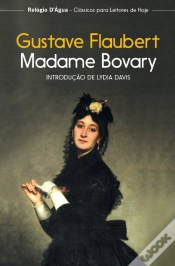
Madame Bovary10%Relógio D'Água13,00€ 10% CARTÃO
-
Os Miseráveis10%Saída de Emergência22,20€ 10% CARTÃOfree shipping
-
A Montanha Mágica10%Relógio D'Água21,90€ 10% CARTÃOfree shipping