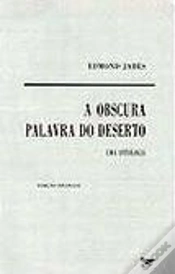
Edmond Jabès
Edmond Jabès (1912 – 1991) foi um escritor e poeta francês de origem egípcia, e uma das figuras literárias mais conhecidas da literatura francesa após a Segunda Guerra Mundial.
Enquanto judeu egípcio, foi forçado ao exílio pela Crise de Suez de 1956, e fugiu para Paris, onde se juntou à comunidade dos surrealistas, embora nunca tenha sido um membro formal do grupo. Viveu em França o resto da sua vida e, em 1987, recebeu de França o grande prémio de poesia. Uma voz importante na poesia francesa do pós-guerra, Edmond Jabès elude a categorização como escritor. A sua obra é um pastiche de diálogo, aforismo, fragmentos, poesia e canção; grande parte do seu trabalho concentra-se no livro como um lugar no qual as ideias – de exílio, Deus, o eu – são abordadas através de perguntas e de ecos.
Embora fosse ateu, a sua escrita refere-se ao misticismo judaico e à Cabala. Numa entrevista, Edmond Jabès explicou: "Para mim, as palavras 'judeu' e 'Deus' são, é verdade, metáforas. "Deus" é a metáfora do vazio; 'Judeu' representa o tormento de Deus, do vazio." A sua obra demonstra uma profunda melancolia e uma consciência aguda de que o judeu se constitui e permanece sempre no exílio.
"Sempre num país estrangeiro, o poeta usa a poesia como intérprete."
Enquanto judeu egípcio, foi forçado ao exílio pela Crise de Suez de 1956, e fugiu para Paris, onde se juntou à comunidade dos surrealistas, embora nunca tenha sido um membro formal do grupo. Viveu em França o resto da sua vida e, em 1987, recebeu de França o grande prémio de poesia. Uma voz importante na poesia francesa do pós-guerra, Edmond Jabès elude a categorização como escritor. A sua obra é um pastiche de diálogo, aforismo, fragmentos, poesia e canção; grande parte do seu trabalho concentra-se no livro como um lugar no qual as ideias – de exílio, Deus, o eu – são abordadas através de perguntas e de ecos.
Embora fosse ateu, a sua escrita refere-se ao misticismo judaico e à Cabala. Numa entrevista, Edmond Jabès explicou: "Para mim, as palavras 'judeu' e 'Deus' são, é verdade, metáforas. "Deus" é a metáfora do vazio; 'Judeu' representa o tormento de Deus, do vazio." A sua obra demonstra uma profunda melancolia e uma consciência aguda de que o judeu se constitui e permanece sempre no exílio.
"Sempre num país estrangeiro, o poeta usa a poesia como intérprete."
Share
Bibliography
-
10%O Livro das QuestõesFlaneur07-202117,00€ 10% CARDfree shipping
-
A Obscura Palavra do DesertoCotovia04-19919,00€