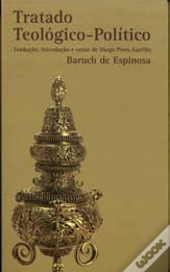
Baruch de Espinosa
Baruch de Espinosa nasceu em Amesterdão a 24 de novembro de 1632, tendo sido um dos principais filósofos do século XVII, a par de Descartes e Leibniz. Nasceu no seio de uma família judaico-portuguesa, oriunda da vila alentejana da Vidigueira e fugida às perseguições da Inquisição. Recebeu dos pais o nome de Benedito de Espinosa, mas assinou Baruch em várias das suas obras, devido à sua condição de judeu nascido em Amesterdão. Acabou por adotar o nome Benedictus, ou seja, a correspondente palavra latina, depois da excomunhão hebraica ditada pela sinagoga portuguesa de Amesterdão em 1656. Espinosa foi um profundo estudioso da Bíblia, do Talmude e de obras de filósofos judeus, como Maimónides. Estudou Sócrates, Platão e Aristóteles, De Rerum Natura de Lucrécio, os epicuristas e o pensamento heterodoxo de Giordano Bruno.
Hermeneuta da Bíblia, Espinosa considerava-a uma obra metafórica e alegórica que não exprimia a verdade sobre Deus. Opôs-se a todo o género de superstições, tendo-se notabilizado pela sua frase «Deus sive natura» («Deus, ou seja, a natureza»). Não admira pois que, da expulsão decretada em português pela sinagoga de Amesterdão, faça parte a imprecação de que «Deus jamais lhe perdoe os seus pecados» e que «a cólera e a indignação do Senhor o cerquem e para sempre se abatam sobre a sua cabeça». Para subsistir, Espinosa trabalhou no polimento de lentes nas épocas em que viveu em casas de famílias de Outerdek e Rijnsburg. Recebia, contudo, correspondência de personalidades tão destacadas como o filósofo Leibniz, o médico Ludovico Meyer, Henry Oldenburg, da Royal Society, e o cientista holandês Huygens. Luís XIV ofereceu-lhe uma pensão para que Espinosa lhe dedicasse um livro, o que ele recusou. Em 1670, Espinosa trocou Amesterdão por Haia, onde concluiu o seu Tratado Teológico-Político, que recebeu críticas dos poderes políticos e religiosos. Recusou o convite da Universidade de Heidelberg, para poder manter a independência de pensamento. Morreu no domingo de 21 de fevereiro de 1677, vitimado por tuberculose. Tinha 44 anos, e muitos anos depois o escritor Jorge Luis Borges haveria de dizer que era um dos homens com quem mais teria gostado de conversar. Ética teve publicação póstuma devida à dedicação dos seus amigos.
Hermeneuta da Bíblia, Espinosa considerava-a uma obra metafórica e alegórica que não exprimia a verdade sobre Deus. Opôs-se a todo o género de superstições, tendo-se notabilizado pela sua frase «Deus sive natura» («Deus, ou seja, a natureza»). Não admira pois que, da expulsão decretada em português pela sinagoga de Amesterdão, faça parte a imprecação de que «Deus jamais lhe perdoe os seus pecados» e que «a cólera e a indignação do Senhor o cerquem e para sempre se abatam sobre a sua cabeça». Para subsistir, Espinosa trabalhou no polimento de lentes nas épocas em que viveu em casas de famílias de Outerdek e Rijnsburg. Recebia, contudo, correspondência de personalidades tão destacadas como o filósofo Leibniz, o médico Ludovico Meyer, Henry Oldenburg, da Royal Society, e o cientista holandês Huygens. Luís XIV ofereceu-lhe uma pensão para que Espinosa lhe dedicasse um livro, o que ele recusou. Em 1670, Espinosa trocou Amesterdão por Haia, onde concluiu o seu Tratado Teológico-Político, que recebeu críticas dos poderes políticos e religiosos. Recusou o convite da Universidade de Heidelberg, para poder manter a independência de pensamento. Morreu no domingo de 21 de fevereiro de 1677, vitimado por tuberculose. Tinha 44 anos, e muitos anos depois o escritor Jorge Luis Borges haveria de dizer que era um dos homens com quem mais teria gostado de conversar. Ética teve publicação póstuma devida à dedicação dos seus amigos.
Share
Bibliography
-
10%ÉticaRelógio D'Água01-202024,00€ 10% CARDfree shipping
-
10%Tratado Teológico-PolíticoINCM – Imprensa Nacional Casa da Moeda03-201925,00€ 10% CARDfree shipping
-
Tratado Teológico-PolíticoMartins Fontes12-200841,34€
-
Tratado Teológico-PolíticoINCM – Imprensa Nacional Casa da Moeda04-200420,19€
-
Tratado Teológico-PolíticoINCM – Imprensa Nacional Casa da Moeda04-198819,08€